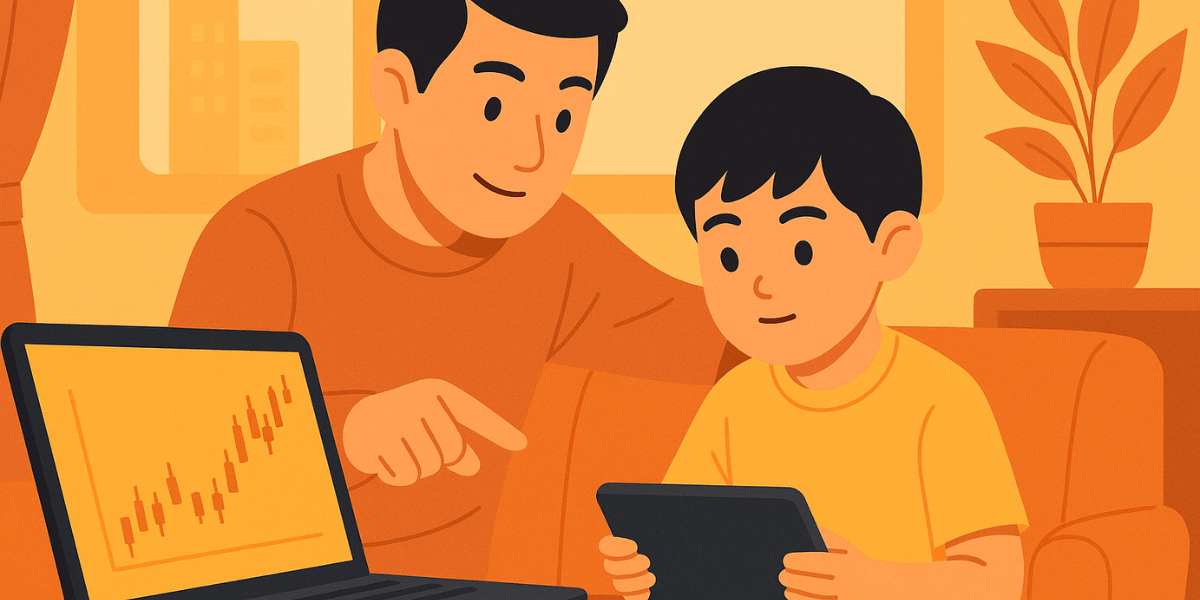
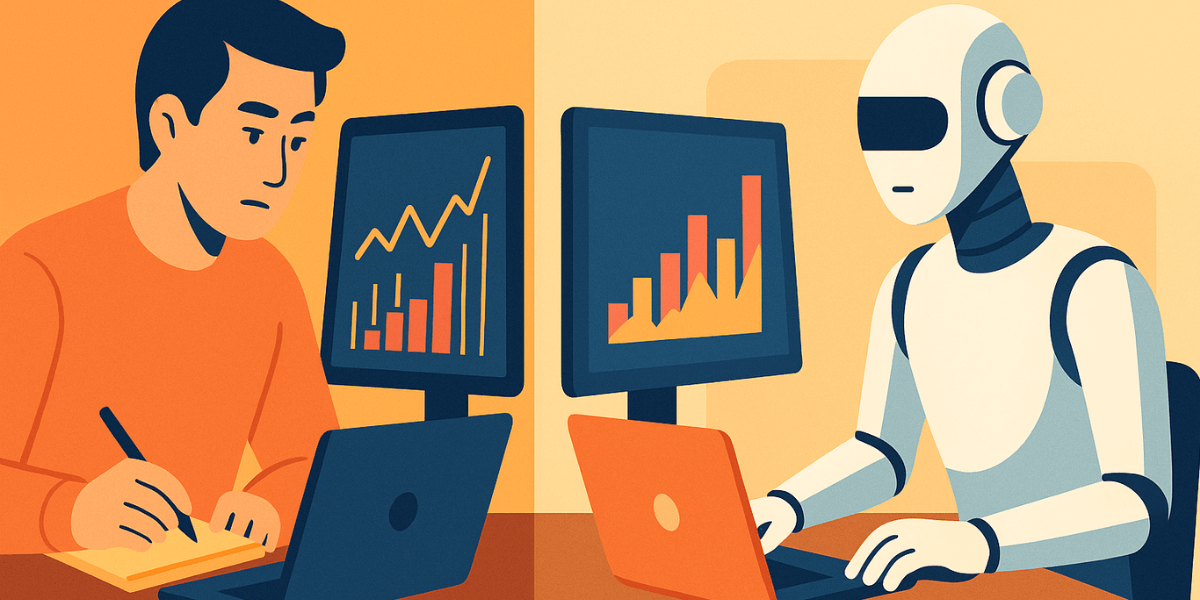
Walking into the study spaces of Tokyo’s top universities, it becomes clear that the city’s young traders approach the financial markets with a mindset that feels closer to applied research than to retail speculation. Whether it is the University of Tokyo, Keio, Waseda, Hitotsubashi, or the Tokyo Institute of Technology, the atmosphere among student traders reflects a culture shaped by quiet discipline, long hours of experimentation, and a deep respect for data.
Their laptops and tablets do not display the typical frenzy of fast-moving charts or emotionally charged trading rooms. Instead, they show backtesting interfaces, code editors, historical datasets, and progress windows. To these students, backtesting isn’t an optional step or a tool to validate a guess; it is the foundation of their entire trading approach. Before a single yen is risked, they work through months of simulated scenarios, controlled environments, and meticulous refinements.
Compared with other Asian regions, where many young traders enter the markets through social media, hype communities, or signal groups, Tokyo University traders adopt a colder, more analytical path. They start with history, not with predictions. They search for structural logic, not emotional conviction. And above all, they treat markets as a long-term intellectual pursuit rather than a short-term opportunity. Their preferred backtesting apps reflect this philosophy with remarkable precision. Instead of choosing tools because they are fashionable or beginner-friendly, they choose platforms that allow clarity, customization, and academic rigor. It is this contrast—between the stereotype of impulsive retail trading and the disciplined, research-heavy environment of Tokyo students—that makes their ecosystem so unique.
The Culture of Backtesting in Tokyo Universities
To understand why Tokyo students gravitate toward backtesting so naturally, it is necessary to appreciate the deeper cultural and educational forces that shape their behavior. Japanese academic life is rooted in a belief that mastery emerges from repetition, refinement, and patience. This philosophy, visible in fields as diverse as engineering, animation, robotics, and classical music, influences how young traders learn to engage with the markets. A strategy is not considered valid simply because it worked once or twice; it must survive historical stress, extreme volatility, structural breaks, and regime shifts. Students are trained to question every assumption, verify every rule, and ensure that each component of a system has a defensible logic supported by data.
This cautious and methodical approach is visible even in the social dynamics of university trading circles. Most groups operate more like research teams than speculative clubs. Students gather in small study rooms or university cafés, often late at night, comparing the nuances of their backtests. They debate the differences between testing on raw historical data versus filtered datasets, question whether a strategy’s apparent performance is simply a random pattern, and discuss overfitting with the seriousness of scientific researchers. This environment encourages humility. There is no rush to take a strategy live, no desire to chase quick wins. Instead, there is a shared respect for the complexity of markets and a collective preference for slow, steady intellectual progression.
Because university life in Japan is already academically demanding, students naturally integrate trading into their existing study habits. Their schedule, heavily structured around homework, labs, group projects, and research sessions, leaves little room for the constant monitoring that day trading requires. Backtesting fits seamlessly into their lives. It allows them to work on trading systems at their own pace, during breaks between classes or late at night, without the pressure of real-time decision-making. Over time, this lifestyle shapes traders who are analytical, patient, and measured—qualities that strongly influence their choice of backtesting tools.
The Types of Backtesting Apps Popular in Tokyo
The backtesting apps used by Tokyo’s university traders form a spectrum that aligns perfectly with their evolving needs as they mature from curious beginners into disciplined, quasi-professional quants. Early in their journey, many students begin with visual backtesting tools to understand market rhythm and structure. These platforms act as gateways, helping them connect their theoretical knowledge to the movement of prices. As they advance, they move toward more customizable tools that support coding, automation, and statistical experimentation, reflecting the academic rigor of their coursework.
Despite the diversity of tools available, the selection among Tokyo students is surprisingly consistent. Their choices are rarely impulsive or influenced by marketing. Instead, they gravitate toward platforms that enable them to implement strict logic, evaluate strategies across a wide range of scenarios, and refine ideas without the limitations of beginner-oriented tools. Their preferences are shaped not by what is popular on YouTube or social media, but by what offers genuine analytical depth. Over time, this leads to a natural migration toward a small set of applications that dominate Tokyo’s university trading culture.
TradingView — The Visual Backtesting Standard
Although it might seem surprising that a platform known for accessibility plays a central role in the lives of such academically driven traders, TradingView fills an important niche. Students in Tokyo appreciate it not for its social features or aesthetics, but because it enables them to perform rapid, intuitive experimentation. TradingView’s replay mode, for example, enables them to scroll through historical price data and observe how hypothetical trades might unfold in real time. While this method does not provide the statistical rigor required for strategy validation, it offers something equally essential: contextual understanding.
In the study cafés scattered across neighborhoods like Shibuya, Shimokitazawa, and Kichijoji, it is common to see students sketching early strategy drafts on paper while manually testing concepts on TradingView.
They pay attention to how prices behave around key structures, how indicators react during sudden shocks, and how patterns break down during consolidation phases. TradingView acts as a visual lab—a place where ideas begin, not where they end. Once a concept appears promising, students move on to more robust environments. Yet, for conceptualization and learning, TradingView remains irreplaceable. It is the first step in a process that ultimately leads to far more sophisticated forms of backtesting.
Python + pandas + backtrader — The Academic Gold Standard
The true heart of Tokyo’s university trading culture lies in the adoption of Python as the primary backtesting environment. The academic influence is unmistakable. Students in fields like engineering, economics, computer science, and mathematics already rely heavily on Python for coursework, data science projects, and statistical analysis. Transitioning from academic Python to trading Python is natural. The tools they use—pandas for time-series manipulation, NumPy for numerical operations, and backtrader for simulation—mirror the structure of lab-based research.
In this environment, a strategy is no longer just an idea drawn on a chart; it becomes a system encoded line by line. Every entry rule, exit condition, stop-loss parameter, and position sizing formula exists as explicit logic. Students gain the ability to test thousands of variations of a system, modify components in seconds, and analyze performance with statistical depth. Because Python offers full transparency, they can detect overfitting, measure robustness, and examine how a strategy behaves under randomization tests or across different market regimes. This level of analytical power aligns perfectly with the intellectual demands of Tokyo’s academic culture.
Within university trading groups, it is common to see students collaborating on shared Jupyter notebooks, discussing how to implement volatility filters or how to ensure that backtests remain realistic by incorporating transaction costs and slippage. Python becomes a living language of insight, enabling students to explore markets with the same precision they apply to robotics, neural networks, or econometrics. As one senior student from Keio reportedly described it, “Backtesting in Python feels like running experiments in a lab—each result teaches you something concrete.”
MetaTrader Strategy Tester — The Speed Tool
Although MetaTrader is not the preferred platform for charting among Tokyo students, its Strategy Tester is valued for a different reason altogether: speed. The ability to run simulations quickly, especially with tick data, makes MT4 and MT5 essential for stress testing. Students who have already validated the conceptual foundation of a system in Python often translate it into MetaTrader to evaluate how it performs under rapid-fire simulations. Because the Strategy Tester can process thousands of scenarios in a fraction of the time required by other platforms, it allows students to accelerate the refinement phase of their research.
Some students dive deeper and learn MQL5 specifically to optimize strategies within MetaTrader’s ecosystem. While the platform may not offer the academic flexibility of Python, its computational efficiency and built-in optimization tools are highly valued. It becomes especially useful when students prepare for trading competitions, where they must demonstrate not only theoretical insight but also practical execution. MetaTrader, in that context, serves as a bridge between the academic and the applied—a tool that helps students bring research closer to real market conditions.
QuantConnect — The Bridge to Professional Quant Finance
Among the most ambitious university traders in Tokyo, QuantConnect holds a special place. The platform provides a simulation environment that mirrors professional quant research far more closely than typical retail tools. Its access to institutional-level data and its ability to support large-scale historical simulations attract students who are preparing for careers in hedge funds, prop firms, or quant research labs. For them, QuantConnect represents a gateway to the world they aspire to join.
The appeal of QuantConnect lies not only in its computational power but also in its ecosystem. Its framework encourages modular design, multi-asset testing, and the creation of strategies that extend far beyond simple indicator-based systems. Students use it to analyze market microstructure, evaluate cross-asset relationships, and explore complex statistical techniques. In group projects, they often divide responsibilities: some focus on data cleaning, others on model design, and others on interpreting results. This collaborative, research-oriented workflow makes QuantConnect feel like a miniature version of professional quant finance.
kabu Station API — The Japanese Domestic Market Tool
While many students focus on global markets, there remains a strong interest in Japanese equities. The domestic market offers unique behavioral characteristics that appeal to quant-minded students. For that reason, the kabu Station API, provided by Kabu.com Securities, has become a powerful tool among traders who want to test strategies specifically within Japanese markets. Its integration with Python allows students to build simulations that capture the nuances of Japanese small-cap behavior, intraday volatility cycles, and reaction patterns to local economic events.
Working with kabu Station also helps students deepen their understanding of Japan’s market structure. They explore the impact of TSE liquidity cycles, morning gaps, and the distinctive rhythm of Japanese retail traders. Through this lens, backtesting becomes not just a technical exercise but a cultural study that helps them understand their home market more intimately.
Excel VBA — The Traditional Tool That Won’t Die
Despite the sophistication of modern trading tools, Excel remains surprisingly influential among Japanese students. This is partly because VBA is still taught in many business and economics programs and partly because spreadsheets offer a unique clarity. For students just beginning their journey into systematic trading, Excel is a comfortable environment for testing simple logic. Although limited in computational power, it provides an accessible way to understand the relationship between rules, signals, and outcomes before moving to more advanced platforms.
Some students even build elaborate spreadsheet systems capable of generating clean visualizations and comparing performance across multiple configurations. While Excel may not compete with Python or QuantConnect, it persists thanks to its familiarity and its ability to lower the barrier to entry for new university traders.
Amibroker — The Quiet Favorite Among Advanced Students
Amibroker’s reputation among Tokyo University traders is understated but deeply respected. It is not the type of tool that students broadcast publicly, yet within serious trading circles, it is well known for its exceptional speed and optimization power. Students who reach the advanced stages of strategy development often adopt Amibroker precisely because it can process millions of simulations far faster than other platforms. Its AFL language, while unique, offers a surprising level of expressiveness, enabling complex rule sets to be implemented with high efficiency.
For students working on multi-parameter strategies or high-dimensional optimizations, Amibroker becomes an indispensable tool. It allows them to explore the full parameter space of a system without waiting days for results. In a culture that values efficiency and refinement, Amibroker’s speed becomes a major advantage.
Why Tokyo Students Backtest More Than They Trade
The preference for backtesting over live trading is not accidental. It is the product of cultural attitudes toward risk, responsibility, and preparation. Japanese society places a high value on thoughtful decision-making, and this ethos permeates academic environments. Students are encouraged to test, refine, and validate before taking action, whether in engineering, finance, or any other discipline. This mindset transfers naturally to trading. Students want proof, not hope. They want structure, not improvisation. They want to understand the behavior of their system across decades of data before trusting it with real money.
This cautious approach also reflects practical realities. many students do not have large amounts of trading capital. Backtesting becomes a way to build expertise and confidence without financial exposure. Over time, this creates traders who are statistically literate, emotionally stable, and deeply aware of the limitations of any strategy.
Why Their Workflow Produces Better Traders
The workflow adopted by Tokyo students—visual exploration, coding-based refinement, and high-speed optimization—results in traders who develop a realistic understanding of markets. They learn early that no strategy performs well in all conditions, that drawdowns are inevitable, and that overfitting is a constant threat. This maturity gives them a long-term advantage. When they eventually transition to real capital, they bring with them a foundation built not on emotion but on empirical evidence.
While no method guarantees success, the culture of systematic preparation positions these students far ahead of the average beginner. They enter the markets with a sense of humility and respect, not with reckless confidence. In a world where overconfidence destroys countless accounts, this mindset becomes a significant edge.
Conclusion
The backtesting culture of Tokyo’s university traders reveals a striking truth: in Japan, trading is treated as a discipline, not a gamble. The tools they use—TradingView, Python, MetaTrader, QuantConnect, Amibroker, Excel, and kabu Station—are merely extensions of a deeper philosophy centered on preparation, rigor, and intellectual curiosity. These students are not trying to outguess the markets; they are trying to understand them. Their commitment to backtesting is a manifestation of this philosophy, and it shows in their performance, their mindset, and their long-term development.
In a financial world dominated by hype and instant gratification, Tokyo’s university traders offer an alternative model—one built on patience, research, and the quiet pursuit of mastery. Their backtesting routines are not just a technique; they are a way of thinking. And as global trading continues to evolve, this Japanese approach may prove to be one of the most resilient paths to sustainable success.
Frequently Asked Questions
Do Tokyo university traders prefer coding-based backtesting?
Yes. Most serious student traders eventually transition to Python-based backtesting because it provides full transparency, flexibility, and academic depth.
Is TradingView still widely used in Tokyo?
It is used extensively for early-stage visual testing, conceptual exploration, and replay analysis, but not for final system validation.
Why do Japanese students backtest far more than they trade live?
Cultural caution, academic rigor, and limited time for live trading contribute to a strong preference for systematic preparation over real-time execution.
Which backtesting tool is considered the most advanced?
QuantConnect and Amibroker are commonly regarded as the most powerful for large-scale simulations and complex research among university-level traders.
Note: Any opinions expressed in this article are not to be considered investment advice and are solely those of the authors. Singapore Forex Club is not responsible for any financial decisions based on this article's contents. Readers may use this data for information and educational purposes only.