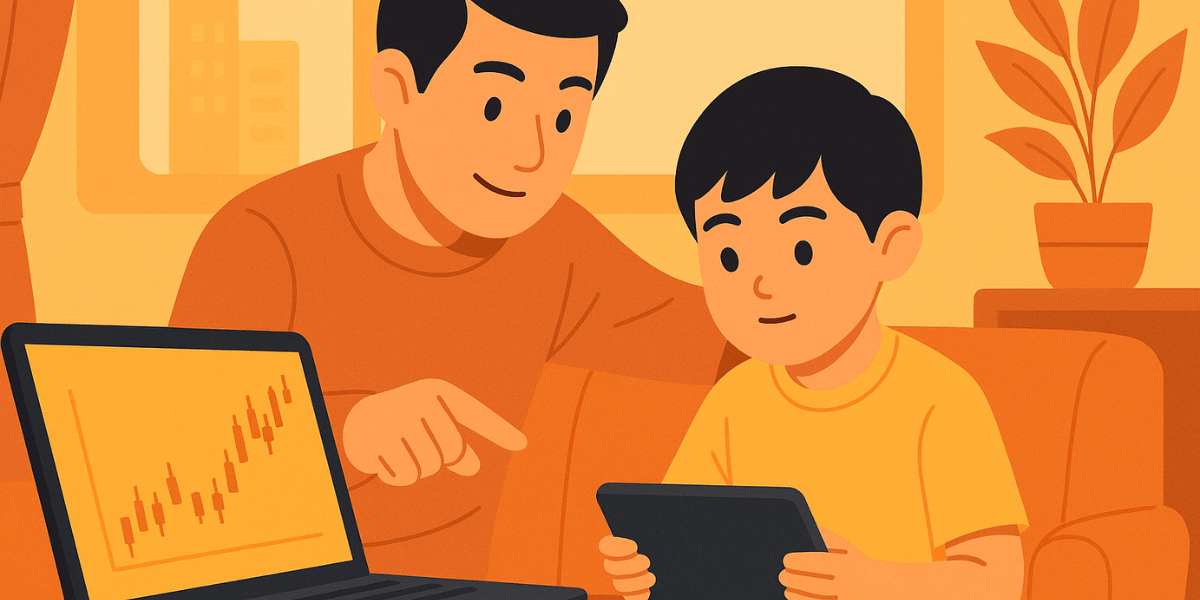
Across Asia’s trading landscape, a new and uncomfortable question is emerging: will Gen Z traders eventually be replaced by trading bots? It is a topic whispered in Discord groups, discussed in late-night study cafés, and increasingly explored in university fintech programs. This generation grew up surrounded by automation, algorithmic suggestions, AI-driven decisions, and an economic environment where machines often outperform humans in speed, accuracy, and emotional neutrality. Unlike previous generations, Gen Z is not simply competing with other traders—they are competing with code.
From Tokyo to Singapore, Jakarta to Seoul, Mumbai to Manila, young traders are confronting a paradox. They use AI, rely on automated signals, follow algorithmic strategies, and experiment with machine learning tools—yet these same tools threaten to replace the very traders who depend on them. As automation accelerates, the boundaries between human and machine-driven trading begin to blur. The central question is no longer whether bots can trade faster; it is whether human decision-makers still play a meaningful role when technology evolves beyond their speed and endurance.
This article examines the complex dynamics behind this transformation. It explores why Gen Z entered trading so aggressively, how automation infiltrated their workflows, why emotion remains a defining human factor, and why full replacement—despite being technologically possible—may never be absolute. Beneath the surface lies a deeper tension: the psychological, cultural, and economic motivations that keep young Asian traders in the game, even as algorithms threaten to dominate it.
The Rise of Automation: A Generation Trading With Machines, Not Against Them
For Gen Z in Asia, trading and automation are inseparable. They started trading during a period when AI chatbots, algorithmic prop firms, automated backtesting platforms, and ultra-fast execution systems were already mainstream. This means they never experienced the slow, manual kind of trading that older generations grew up with. Their baseline expectation is speed, convenience, and automation.
Many Gen Z traders encounter bots long before they place their first real trade. They see Telegram channels offering automated signals, YouTube videos showcasing expert advisors, and online communities praising algorithmic strategies. When they ask questions in student trading groups, the answers often involve indicators or code. Automation becomes the default language of participation.
This context makes Asia one of the fastest-growing hubs for algorithmic trading experimentation. University students collaborate on building simple bots. Young retail traders modify scripts. Enthusiasts run backtests on weekends. Even those who do not code rely heavily on automation tools created by others. Bots are not an external threat; they are active collaborators.
Why Automation Feels So Natural for Gen Z
Gen Z in Asia grew up in an environment defined by recommendation systems. Every aspect of their daily life—music, videos, shopping, transportation, social interactions—is shaped by algorithms that filter choices and present what appears most relevant. This conditioning makes them comfortable with systems that analyze patterns and make optimized suggestions.
In trading, the same logic applies. When they observe that bots can scan thousands of data points in milliseconds and execute without hesitation, they interpret it as a natural extension of the algorithmic world they already inhabit. The idea that a bot could outperform a human does not feel threatening; it feels predictable. In fact, many young traders assume they are more likely to succeed if they collaborate with automation rather than oppose it.
This psychological alignment accelerates the adoption of trading bots. Gen Z does not perceive automation as a competitor but as a tool enhancing their capabilities. Yet this same perspective fuels the deeper question: if bots perform so well, why not let them replace human traders entirely?
Speed vs. Judgment: Where Bots Already Outperform Humans
Trading bots surpass humans in almost every measurable technical function. They react instantly, analyze more data, avoid emotional interference, and maintain perfect discipline. In markets where speed is the primary advantage—such as scalping, arbitrage, and high-frequency signals—humans are outclassed completely.
Gen Z traders see this firsthand. Many test bots that outperform their manual attempts. They run backtests demonstrating consistency that is difficult to replicate manually. They watch how bots execute a plan without hesitation. As a result, young traders begin asking whether their presence is necessary at all.
The growing efficiency gap is undeniable. Automation executes faster, learns faster, and adapts faster when programmed correctly. But speed is not the only factor in trading, and bots excel only within the constraints of their design.
The Limitations of Bots: Why Humans Still Matter
Despite the dominance of automation, bots remain constrained by the logic governing their decisions. They cannot interpret geopolitical shifts, cultural nuances, regulatory changes, or sudden sentiment reversals without being explicitly programmed to do so. Markets often move for reasons beyond chart patterns or indicator readings. Bots struggle with messy, unpredictable realities.
Gen Z traders, particularly those in Asia, often understand cultural context better than any automated model. They interpret social media trends, regional political tensions, or shifts in consumer sentiment that might influence market behavior. When a rumor spreads on Weibo or a policy announcement appears in Singapore, humans interpret implications long before bots register significance.
Another limitation involves creativity. Bots excel in repeating known patterns, but they cannot invent new strategies without human imagination. They can optimize, refine, and execute, but they do not create disruptive ideas. For Gen Z traders, creativity remains a competitive edge—a point often overlooked amid the automation narrative.
The Emotional Paradox: Gen Z Wants Control Despite Preferring Automation
A defining psychological conflict emerges among young Asian traders. While they appreciate the precision and discipline of bots, many still want to feel involved. Trading often serves as a personal challenge, a way to measure skill, or even a source of identity. Allowing a bot to take over entirely removes the emotional meaning behind trading.
Gen Z traders do not merely seek profit; they seek participation. The feeling of executing a smart trade, predicting market movement, or learning from loss forms part of the emotional experience. Even if bots offer efficiency, they cannot replace the sense of agency that keeps humans engaged. This emotional attachment ensures that manual trading never disappears completely.
The Economic Reality: Bots Are Not Free and Not Equal
Automation is powerful but not universally accessible. High-quality bots require development skills, data, optimization, and often costly infrastructure. Many young traders cannot afford advanced algorithmic tools or lack the technical knowledge to maintain them. This creates an uneven playing field.
While some Gen Z traders develop bots themselves, most rely on public tools or third-party systems. These often lack reliability or transparency. As a result, most young traders continue to rely on hybrid systems, blending manual decisions with partial automation. Full automation remains more of a theoretical threat than a universal reality.
The Role of Regulation Across Asia
Different Asian markets have distinct regulatory frameworks surrounding automated trading. In Singapore, strict oversight limits what bots can do without authorization. In Malaysia and Indonesia, retail bots exist in a gray area. In Korea and Japan, algorithmic tools are more widely integrated into mainstream trading.
These variations prevent a uniform transition to full automation. Regulations evolve slowly, especially when retail traders are involved. Gen Z may embrace bots rapidly, but institutional frameworks often lag behind. The result is a fragmented landscape where automation grows unevenly, ensuring that human traders remain central for years ahead.
The Cultural Factor: Why Asia Still Values Human Decision-Makers
In many Asian cultures, decision-making carries symbolic importance. Families respect individuals who demonstrate mastery in fields requiring discipline, intuition, and strategy. For many young Asians, trading is a form of intellectual pursuit rather than a mechanical task. Being “good at trading” carries a form of prestige that running a bot does not.
This cultural context slows automation’s encroachment. Even if bots offer superior results, the journey of trading remains meaningful. Gen Z traders in Asia may use bots intensively, but they still value knowledge, analysis, and the ability to interpret markets manually. Automation enhances their skills, but does not replace the desire for mastery.
Will Bots Replace Gen Z Traders? A Nuanced Reality
Bots will not eliminate Gen Z traders. They will reshape what traders focus on. Manual execution will decline. Emotional decision-making will decline. Guesswork will decline. But strategic oversight, risk planning, psychological management, and creative design will become more important.
Bots will handle mechanics; humans will handle direction. The future Asian trader is not a competitor to automation but an orchestrator of it. Gen Z will not be replaced; they will evolve. Their role will shift from operator to supervisor, from executor to architect. Instead of fighting bots, they will learn to command them.
Conclusion
The question of whether Gen Z traders in Asia will be replaced by bots has no simple answer. Automation dominates the technical aspects of trading, and its growth will continue. But trading remains a human discipline in its strategic, psychological, cultural, and creative dimensions. Bots can analyze data; they cannot interpret meaning. They can execute decisions; they cannot replace the emotional experience that drives young traders.
The future belongs not to bots alone but to the synergy between human insight and machine precision. Gen Z traders who learn to integrate automation intelligently will thrive, while those who resist technological evolution may struggle. The next generation of Asian traders will not be defined by replacement but by transformation. They will trade differently, think differently, and use machines not as substitutes but as amplifiers of their potential.
Frequently Asked Questions
Will bots completely replace Gen Z traders?
No. Bots will automate execution, but strategic judgment, creativity, and interpretation will still require human involvement.
Do bots perform better than young human traders?
In speed and discipline, yes. But they struggle with context, ambiguity, and sudden market shifts that require human interpretation.
Should Gen Z traders learn coding to survive automation?
Coding helps but is not mandatory. Understanding how automation works is more important than writing code from scratch.
Will trading become fully automated in Asia?
Highly automated, yes. Fully automated, unlikely. Cultural, regulatory, and psychological factors will keep humans in the loop.
Note: Any opinions expressed in this article are not to be considered investment advice and are solely those of the authors. Singapore Forex Club is not responsible for any financial decisions based on this article's contents. Readers may use this data for information and educational purposes only.