In the last decade, Asia has become the global epicenter of e-sports. From Seoul’s professional gaming houses to Tokyo’s arcade-inspired PC cafés, e-sports has evolved into a full-scale competitive ecosystem. But an unexpected trend has emerged beneath this booming industry: a growing number of former and active e-sports athletes are transitioning into trading—particularly forex, crypto, and index derivatives. And they are learning remarkably fast.
Across Singapore, Malaysia, Indonesia, Thailand, Korea, Japan, and even the Philippines, brokers and trading communities report the same observation: young people with competitive gaming backgrounds grasp market dynamics faster than average beginners. They display exceptional reaction speed, pattern recognition, emotional control, and discipline—skills cultivated through years of high-stakes gaming. This has quietly transformed a generation of gamers into some of Asia’s most promising new traders.
This article explores why e-sports athletes are learning trading faster than traditional retail traders, how their skills translate into financial performance, and why Asia is uniquely positioned at the intersection of gaming and financial markets.
The Bridge Between E-Sports and Trading: A Natural Fit
To an outsider, e-sports and trading may appear unrelated. One involves virtual worlds, mechanics, and strategy; the other deals with economic indicators, price charts, and market psychology. But beneath the surface, the skill sets overlap with surprising precision.
1. Pattern Recognition Under Pressure
E-sports athletes spend thousands of hours reading situations, recognizing enemy movements, predicting outcomes, and reacting with precision. Trading requires the same muscle: recognizing chart patterns, momentum shifts, volatility spikes, liquidity traps, and behavioral cues—often within seconds.
2. Cognitive Speed and Real-Time Decision Making
Fast execution is the heart of both activities. Whether micro-managing units in StarCraft II or reacting to a sudden spike in USD/JPY during the Tokyo session, high-speed cognitive processing is essential. E-sports athletes excel at filtering noise and acting decisively under stress.
3. Adaptability and Meta-Shifts
Gaming “metas” change constantly. Players adapt to new patches, character buffs, or strategies. Similarly, markets change regimes—trending, ranging, risk-on, risk-off. E-sports players are used to learning fast and adjusting without emotional friction.
4. Emotional Management
Professional gaming teaches resilience, tilt-control, and mental reset—key psychological foundations for trading. E-sports athletes understand how to detach emotionally after losses, analyze mistakes, and re-enter with clarity.
5. Discipline and Training Structure
Gamers follow rigorous schedules: training blocks, scrims, VOD reviews, mechanical drills. This discipline translates smoothly into trading journals, backtesting, and systematic routines.
These intersections explain why gaming culture has become fertile ground for fast, capable beginners in Asia’s markets.
Why Asia Leads the E-Sports-to-Trading Pipeline
Asia’s global leadership in gaming has created a perfect environment for this crossover. Several factors contribute to this phenomenon.
1. High Digital Literacy From an Early Age
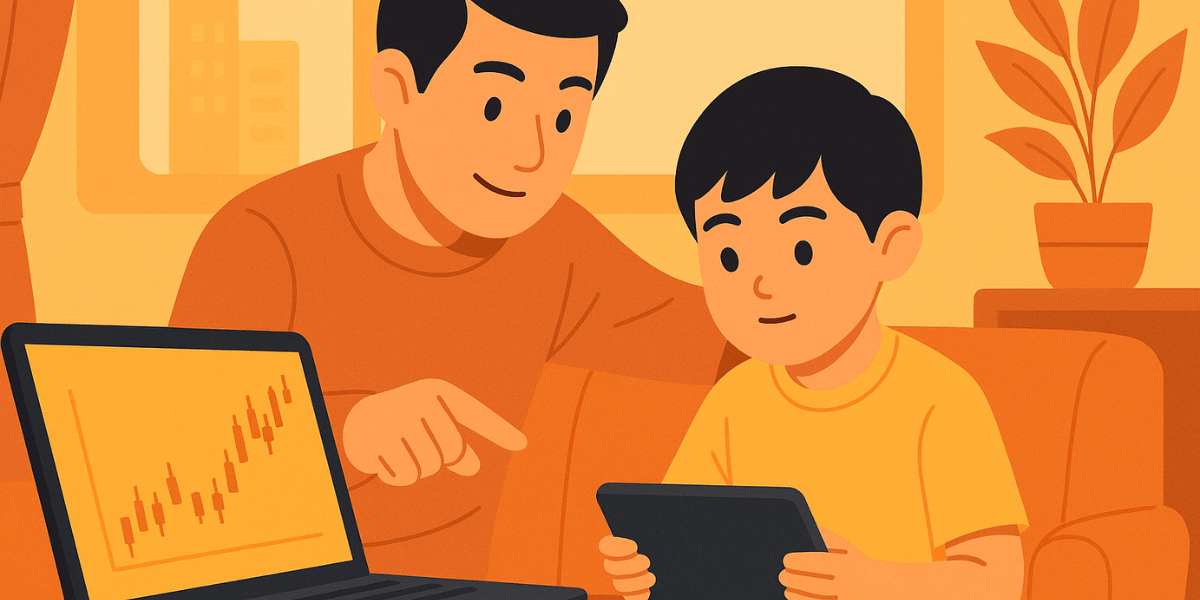
Young Asians grow up surrounded by high-speed internet, PC cafés, mobile gaming, and ubiquitous technology. Trading platforms feel natural rather than intimidating.
2. Cultural Normalization of Competitive Skill-Building
Countries like Korea push structured training, competition, ranking, and constant improvement—values that align with trading success.
3. PC Café and Gaming House Culture
Just like study cafés in Japan and Korea became trading hubs, PC cafés have become quiet breeding grounds for curious traders experimenting with charts between gaming sessions.
4. Strong Math and Analytical Education
Singapore, Korea, and Japan rank among the world’s top performers in mathematics and logical reasoning, giving traders an analytical advantage.
5. Financial Ambition Among Young Adults
High cost of living, competitive job markets, and social mobility pressures push Asian youth to explore alternative income streams—trading included.
All these factors create an environment where a gamer turning into a trader is not unusual—it is almost predictable.
The Skills E-Sports Athletes Bring Into Trading
Let’s examine the specific technical and psychological advantages gamers display when transitioning into markets.
1. Exceptional Hand-Eye and Brain-Eye Synchronization
Fast reaction speed improves execution, especially for short-term strategies like scalping or volatility trading.
2. Advanced Situational Awareness
Gamers can monitor multiple data points at once: price, time, volume, news sentiment, risk levels.
3. High-Speed Learning Loops
E-sports players are trained to learn quickly, internalize feedback, and iterate fast—perfect for backtesting and refining strategies.
4. Stress Tolerance
Competitive players are accustomed to losing streaks, pressure tournaments, ranked deranks, and clutch situations. Trading volatility feels familiar.
5. Multi-Tasking Without Impulsivity
Gamers develop an unusual blend of agility and restraint—reactive when needed, strategic during planning.
6. Understanding of Tilt and Emotional Burnout
They already know the dangers of “tilt,” making them more receptive to discipline-based trading approaches.
7. Data Interpretation Skills
Modern gaming involves metrics, analytics, VOD breakdowns, and performance reviews—mirroring trading journals and statistical evaluations.
These traits give e-sports athletes a structural advantage in early trading education.
Case Study: Korea — The World’s E-Sports Capital
South Korea is the clearest example of the e-sports-to-trading pipeline. Korean youth are highly trained in discipline and structured learning. Many transition into trading during or after their gaming careers.
Why Korea Produces Fast Trading Learners
- Top-tier internet speed supporting real-time execution
- Culture of silent workspaces and study cafés
- Competitive mentality aligned with trading
- Exposure to gaming analytics from childhood
- High acceptance of digital income streams
Prop trading firms in Korea quietly acknowledge hiring individuals with gaming backgrounds because of their superior reaction times and data processing abilities.
Case Study: Japan — Quiet Discipline Meets Market Precision
Japan’s gaming culture is deeply tied to focus, precision, and silent discipline—perfect attributes for trading.
Why Japanese Gamers Excel in Trading
- Strong pattern-recognition skills from rhythm games, fighting games, and strategy games
- Culture of calm analysis (mokusatsu productivity)
- High respect for structured improvement
- Quiet temperament naturally suited for market psychology
Japanese traders tend to gravitate toward yen pairs, options strategies, and long-term systems—mirroring their gaming behavior: structured, elegant, and strategic.
Case Study: Southeast Asia — The Mobile-Gaming Generation
In Malaysia, Indonesia, Thailand, and the Philippines, mobile gaming dominates youth culture. Many young traders start by using mobile platforms and transition smoothly into learning charts, indicators, and price action.
Why Mobile Gamers Make Fast Learners
- Thumb-reflex precision translates into quick market reactions
- Comfort with mobile trading apps
- Adaptability from fast-paced mobile games like MLBB, PUBG Mobile, and COD Mobile
- Strong social communities that encourage fast skill acquisition
These regions see some of the fastest adoption rates for trading education, especially among 18–30-year-olds.
The Psychology Behind Why E-Sports Athletes Learn Trading Faster
Trading is 20% strategy and 80% psychology. Gamers enter with an unusually strong psychological foundation.
1. They Stay Calm Under Pressure
E-sports competitions simulate intense stress; trading volatility feels manageable by comparison.
2. They Understand Probability and Risk
Games teach the logic of uncertainty—win rates, cooldowns, resource management, timing.
3. They Respond Well to Structured Practice
Gamers enjoy training routines: drills, reviews, and system optimization.
4. They Accept Losses Without Ego
Every gamer has endured losing streaks. Emotional resilience is built in.
5. They Learn Through Repetition and Feedback
Exactly the cognitive framework needed for consistent trading improvement.
How E-Sports Athletes Approach Trading Differently
E-sports players do not treat trading emotionally—they approach it like a game they want to master.
1. They Build “Training Blocks” Instead of Random Learning
Gamers break their learning into segments: price patterns, risk management, and session performance reviews.
2. They Analyze Their Performance Objectively
They review trades like VODs—checking mistakes, timing, and execution.
3. They Use Trading Journals Instinctively
It feels natural because it resembles gaming analytics.
4. They Are Comfortable With Long Practice Hours
Grinding is a normal part of gaming culture—mirrored in market study.
5. They Respect Strategy More Than Emotion
Gamers know that following a system beats random improvisation.
Why E-Sports Athletes Avoid Common Beginner Mistakes
The average beginner struggles with overtrading, revenge trading, FOMO, and lack of discipline. Gamers overcome these faster because of their mental models.
They resist tilt
Gamers have experience managing emotional swings, reducing revenge trading.
They understand cooldowns
They accept that breaks and rest cycles improve performance.
They optimize performance through settings
Gamers tweak their trading environment like game settings—lighting, sound, ergonomics—boosting consistency.
They respect long-term progression
They know mastery takes time and iteration.
Why Trading Is Attractive to E-Sports Athletes
E-sports careers are often short, competitive, and unpredictable. Trading offers stability, longevity, and autonomy.
- Flexible hours
- Independent performance
- No physical decline
- Unlimited skill ceiling
- Clear feedback loops
- Scalable income potential
For many, trading becomes the “retirement plan” after competitive gaming—or a parallel skill they develop during off-season periods.
Future Trends: Will Asia Produce the First “E-Sports Trader League”?
Given the overlap between both skills, Asia may see formal pipelines connecting gaming and trading:
- prop firms recruiting ex-e-sports players
- gamified trading academies
- trading tournaments inspired by e-sports format
- AI-enhanced training platforms built like strategy games
- PC cafés with hybrid trading sections
- study cafés hosting trading bootcamps
This crossover is just beginning—and Asia is leading it.
Conclusion
E-sports athletes are becoming some of the fastest learners in trading across Asia because they bring the perfect blend of psychological resilience, pattern recognition, reaction speed, discipline, and analytical thinking. Their training environment mirrors financial markets more closely than any traditional academic path. As the lines between gaming and trading continue to blur, Asia stands at the front of a new movement: a generation raised on digital strategy, now applying that mastery to global markets.
In many ways, the traders of tomorrow may not come from finance schools—but from the e-sports arenas of Seoul, Tokyo, Jakarta, Kuala Lumpur, and Bangkok.
Frequently Asked Questions
Are e-sports athletes naturally better traders?
They are not guaranteed to succeed, but their existing skill set gives them a noticeable learning advantage.
Which games produce the best traders?
Strategy games (StarCraft II), MOBAs, FPS titles, and rhythm games create strong transferable skills.
Do Asian prop firms recruit gamers?
Yes. Several South Korean and Japanese prop firms quietly look for talent with gaming backgrounds.
Do gamers struggle with trading psychology?
Less than average beginners. They already understand tilt, discipline, and structured improvement.
Can mobile gamers become good traders?
Yes. Mobile gamers process high-speed information efficiently, which helps in fast volatile markets.
Is trading similar to high-level gaming?
In terms of speed, strategy, discipline, and emotional control—yes, very much.
Do e-sports players tend to scalp?
Many do, because they are comfortable with fast decision-making, but others shift to swing trading for sustainability.
Can gaming improve reaction time for trading?
Yes. Cognitive research shows that gamers have faster-than-average response times.
Are gaming cafés used for trading?
Increasingly, yes. Some traders operate from PC cafés during market sessions.
Will gaming become a recognized pathway to trading careers?
Very likely. The overlap is too strong, and Asia is already seeing early examples.
Note: Any opinions expressed in this article are not to be considered investment advice and are solely those of the authors. Singapore Forex Club is not responsible for any financial decisions based on this article's contents. Readers may use this data for information and educational purposes only.