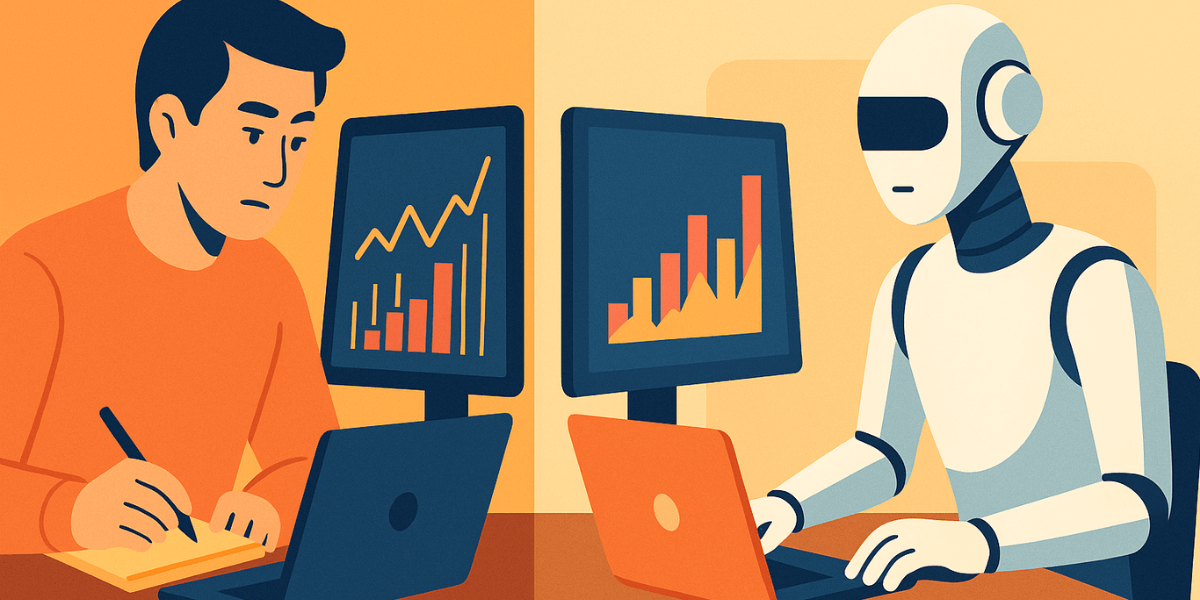
Financial markets reward clarity, patience, and the ability to think deeply amid noise. Yet most traders and analysts today operate in an environment of constant distraction—notifications, headlines, chat groups, and algorithmic data streams all competing for their attention. In this landscape, the concept of “Deep Work,” coined by author and professor Cal Newport, offers not only a productivity philosophy but a mental edge.
Deep work refers to the state of sustained, undistracted concentration that allows the brain to perform complex cognitive tasks at its highest potential. It is the mental opposite of multitasking—the modern epidemic that fragments attention and reduces analytical precision. For traders and market analysts, the ability to enter and maintain deep focus is not a luxury; it is a professional necessity.
Market analysis, whether fundamental or technical, requires synthesizing massive volumes of information—economic data, price action, sentiment, and risk signals—into coherent, actionable insight. This process depends on depth of reasoning, not speed of consumption. In short: traders who master deep work understand markets better, make fewer impulsive errors, and develop insights others miss entirely.
The Case for Deep Work in Trading
Trading is one of the few professions where real-time decisions translate directly into measurable results—profit or loss. Yet, paradoxically, most traders allow their focus to be fragmented by minor distractions. The human brain is not designed to multitask effectively; it simply switches attention rapidly between tasks, creating an illusion of productivity while eroding depth of thought.
In market analysis, shallow work—checking charts, reacting to news feeds, or scrolling through forums—produces temporary stimulation but little insight. Deep work, by contrast, engages the brain’s full analytical capacity, allowing the trader to detect hidden patterns, think strategically, and remain emotionally grounded in volatility.
What Deep Work Means for Traders
- Focused Chart Analysis: Spending uninterrupted blocks of time studying price structure, correlations, and volume data.
- Strategic Reflection: Reviewing trades, writing journals, and refining strategy design without distraction.
- Macro Synthesis: Reading economic data, policy reports, and sentiment research in an environment conducive to concentration.
- Decision Quality Over Quantity: Making fewer but more deliberate trades based on clear conviction rather than impulse.
Deep work transforms trading from reaction to creation—from responding to noise to constructing informed hypotheses about market behavior.
The Neuroscience Behind Deep Focus
At its core, deep work is a neurological state. When attention remains undivided, the prefrontal cortex coordinates high-order cognitive processing—pattern recognition, reasoning, and planning. Sustained concentration increases myelin formation in neural circuits, strengthening cognitive efficiency over time. In other words, focus is not just a skill; it’s a form of neural training.
Distraction, by contrast, disrupts these processes. Every time a trader checks a phone or toggles between charts and social media, the brain incurs a “switching cost.” Even a few seconds of interruption can take several minutes to regain full cognitive momentum. Over a trading day, these micro-distractions accumulate into lost insight and slower decision cycles.
Neural Benefits of Deep Work for Analysts
- Enhanced Memory Retention: Deep work strengthens hippocampal engagement, improving recall of price action and economic context.
- Faster Pattern Recognition: Focused repetition solidifies recognition of setups, trends, and anomalies.
- Reduced Cognitive Fatigue: The brain consumes less energy maintaining one mental thread than switching between many.
- Improved Emotional Regulation: Sustained focus keeps the limbic system (emotions) subdued, reinforcing rational control under pressure.
Neuroscience confirms what elite traders already practice intuitively: clarity is the product of disciplined attention.
Why Distraction Is the Enemy of Market Clarity
Financial markets thrive on uncertainty—and uncertainty thrives on distraction. The modern trading environment bombards analysts with competing narratives: news alerts, social media commentary, influencer predictions, algorithmic outputs, and rumor cycles. Amid this, the ability to think independently becomes rare and valuable.
Shallow engagement leads to reactive behavior. Traders jump between instruments, overtrade, or panic-exit positions based on partial information. Deep work, on the other hand, cultivates the mental stillness needed to observe markets objectively and respond strategically rather than emotionally.
The Cost of Shallow Focus
- Reduced Decision Quality: Fragmented attention increases the probability of cognitive bias and errors.
- Emotional Volatility: Rapid attention shifts amplify stress hormones, leading to impulsive behavior.
- Information Overload: The brain filters less effectively when bombarded, leading to confusion and hesitation.
- Loss of Pattern Integrity: Traders fail to recognize recurring structures in price action due to inconsistent observation.
Ultimately, the greatest risk is not market volatility—it’s mental volatility.
Building a Deep Work Routine for Market Analysis
Deep work requires intentional design. It’s not achieved by willpower alone but through deliberate structure, environment, and habit. Below are practical frameworks to help traders cultivate deep focus in their daily workflow.
1. Schedule Blocks of Uninterrupted Analysis
Time is the fundamental currency of deep work. Dedicate fixed, recurring blocks (e.g., 90–120 minutes) exclusively for deep analysis—no notifications, chats, or external interruptions. Treat these sessions as sacred appointments with your own intellect.
- Morning macro review: Reading central bank statements or market reports without multitasking.
- Afternoon technical deep dive: Analyzing higher-timeframe charts or refining models.
- Evening synthesis: Reviewing journal notes and refining trade plans for the next session.
Consistency trains the mind to associate specific time slots with peak concentration.
2. Design a “Distraction-Free” Workspace
Your physical and digital environment determines your cognitive environment. Simplify your setup to minimize external noise.
- Keep only essential tools visible—chart platforms, note apps, and economic calendars.
- Use a secondary monitor for research but close social media and unrelated tabs.
- Silence all non-critical notifications and remove your phone from reach.
- Keep ambient light soft and stable to prevent visual fatigue during analysis.
Professional traders understand that the quality of the workspace reflects the quality of thought.
3. Warm Up and Cool Down the Brain
The brain, like a muscle, performs best with structured activation and recovery. Start sessions with a brief mental warm-up: reviewing key economic levels, recent price behavior, and personal goals. End sessions with cool-down reflection: what insights were gained, what patterns emerged, what biases appeared.
- Warm-up (5–10 min): Focused breathing, reviewing the daily plan, setting mental intent.
- Cool-down (5–10 min): Journaling outcomes, noting emotional states, planning adjustments.
These rituals bookend deep work sessions, maintaining mental clarity between trading and rest.
4. Leverage Analog Thinking
Ironically, stepping away from digital screens can enhance analytical depth. Writing by hand activates different neural circuits associated with comprehension and long-term memory. During deep work blocks, consider using notebooks for hypothesis sketches, risk maps, or emotional observations. The slower pace promotes precision of thought.
5. Apply the “Shutdown Ritual”
Traders often struggle to disconnect mentally after markets close. This lingering cognitive engagement prevents recovery. Implement a “shutdown ritual” at the end of each trading day: finalize journal entries, close charts, tidy workspace, and perform a short mindfulness or gratitude exercise. This signals the brain that analytical effort is complete, allowing for rest and regeneration.
Deep Work as a Competitive Edge in Asia’s Trading Hubs
In Asia’s leading financial centers—Singapore, Hong Kong, Tokyo—the pace of trading is relentless, spanning multiple time zones. Traders face overlapping sessions, rapid news cycles, and cultural expectations of high performance. In such environments, deep work becomes both a survival mechanism and a differentiator.
Institutional analysts who adopt deep work principles produce higher-quality reports, execute cleaner strategies, and manage stress better. They are less reactive to noise and more consistent in execution. This mental discipline aligns perfectly with the Asian ethos of focus, precision, and continuous improvement.
Applications in Professional Trading Environments
- For Portfolio Managers: Deep work supports strategic thinking across asset classes and time horizons.
- For Technical Analysts: Sustained focus enhances accuracy in chart pattern recognition and trend validation.
- For Risk Officers: Deep cognitive immersion improves scenario planning and contingency awareness.
- For Retail Traders: Deep work provides structure and balance in a high-distraction digital environment.
In short, the Asian trader who masters deep work integrates discipline with adaptability—the very traits that markets reward long-term.
Common Obstacles and How to Overcome Them
1. The Myth of Multitasking
Many traders believe they can handle multiple charts, alerts, and news feeds simultaneously. In truth, each switch drains mental energy and reduces decision accuracy. Replace multitasking with parallel preparation: structure tasks sequentially and automate repetitive functions to preserve cognitive resources for analysis.
2. The Fear of Missing Out (FOMO)
One of the strongest enemies of deep work is the anxiety of missing trades or headlines. Combat this by defining in advance what constitutes actionable information. Create filters for market noise—alerts only for setups matching your pre-defined edge. Trust that focus creates more value than endless vigilance.
3. Emotional Fatigue
Emotional turbulence—losses, boredom, or overconfidence—can pull traders out of deep work. Build emotional resilience through mindfulness, exercise, and journaling. Recognize that deep work is not merely intellectual; it’s emotional control in motion.
4. Digital Dependency
Smartphones and chat platforms are the silent killers of cognitive depth. Consider scheduled disconnection windows during key analysis periods. In team environments, communicate clear “focus hours” where responses are deferred to protect collective flow.
The Philosophical Foundation of Deep Work in Markets
Deep work is not only a technique but a philosophy of respect for time and thought. In markets dominated by algorithmic speed, human traders must rediscover depth as their advantage. Machines can process data, but they cannot interpret meaning or exercise judgment under uncertainty. That remains a human domain—and deep work is the tool that keeps it sharp.
By cultivating depth, traders transition from reactive speculation to deliberate craftsmanship. Each analysis becomes a structured inquiry into the dynamics of price, sentiment, and risk. This shift turns trading into a process of intellectual refinement rather than emotional warfare.
Conclusion
“Deep work” is not a passing productivity fad—it is the discipline that sustains long-term excellence in trading and market analysis. It channels the most scarce resource in modern markets: undivided human attention.
By structuring focus, minimizing distraction, and training cognitive stamina, traders unlock levels of clarity unreachable in a fragmented mindset. They make decisions rooted in insight rather than impulse, transforming chaos into structured opportunity.
In an era of information overload, those who cultivate deep work do not chase the market—they understand it. And in financial analysis, understanding always compounds faster than speed.
Frequently Asked Questions
What is deep work in the context of trading?
Deep work in trading means sustained, distraction-free concentration on market analysis, allowing traders to synthesize data, refine strategy, and make higher-quality decisions.
How can traders practice deep work daily?
By scheduling uninterrupted analysis blocks, minimizing digital distractions, using warm-up and cool-down rituals, and journaling insights systematically after each session.
Does deep work improve emotional control?
Yes. Deep work reinforces the brain’s self-regulation circuits, reducing impulsivity and stress responses triggered by market volatility.
How long should a deep work session last?
Most traders perform optimally in 90–120-minute sessions followed by short recovery breaks. Consistency is more important than duration.
Is deep work compatible with team trading environments?
Absolutely. Teams can implement shared “focus hours” and asynchronous communication to preserve collective concentration during analysis windows.
Note: Any opinions expressed in this article are not to be considered investment advice and are solely those of the authors. Singapore Forex Club is not responsible for any financial decisions based on this article's contents. Readers may use this data for information and educational purposes only.