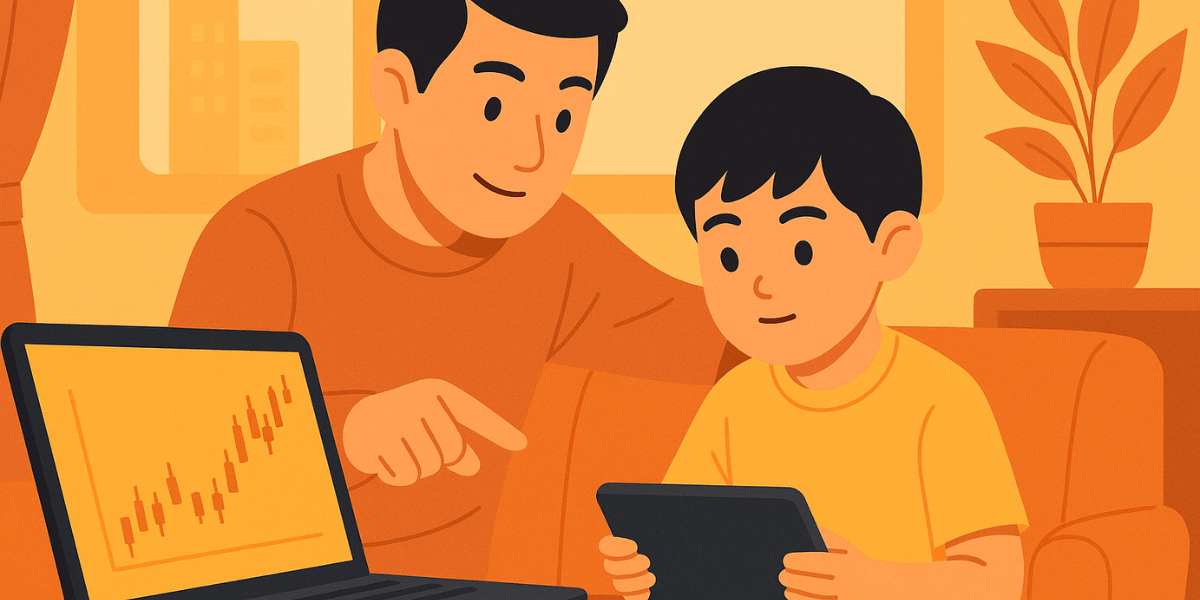
In recent years, the Philippines has become one of the most dynamic micro-trading environments in Southeast Asia. What was once a market dominated by traditional stockbrokers, slow-moving savings accounts, and conservative financial habits has rapidly evolved into a digital-first ecosystem where thousands of new retail traders enter the markets with starting balances as low as five dollars.
This transformation is not driven by conventional investing culture or institutional market participation. Instead, it reflects a profound shift in how Filipino households, students, gig-economy earners, and overseas workers interact with money, opportunity, and technology in an economy defined by volatility, migration, and digital acceleration.
Micro-trading—defined here as entering global financial markets with extremely small initial capital—has grown in popularity due to a combination of local financial constraints, high mobile internet penetration, changing generational expectations, and aggressive platform accessibility. Brokers targeting ASEAN retail users have adapted their infrastructure to meet this demand: ultra-low minimum deposits, cent accounts, mobile-first trading environments, instant funding channels, and simplified interfaces designed for first-time traders. This cultural and technological convergence has created a unique Filipinized version of modern retail trading—one where the barrier to entry is no longer capital, but discipline.
The Economic Backdrop Behind the $5 Entry Point
To understand why micro-trading has risen so rapidly in the Philippines, it is essential to consider the country’s economic landscape. The Philippines has one of the youngest populations in Asia, with a median age of around 25. Economic mobility is deeply tied to overseas employment, local gig work, and digital side hustles. For many Filipinos, conventional investment pathways—such as property ownership, large equity portfolios, or long-term retirement products—remain distant due to cost barriers and limited accessibility.
Micro-trading fills this gap. It allows individuals to participate with whatever amount they can afford on a weekly or monthly basis. Five dollars may seem insignificant from a global perspective, but within the local context, it represents the equivalent of a meal out, a prepaid phone load, or two days of transport for many workers. The psychological reframing is important: micro-trading gives Filipinos a financial gateway that fits their real income constraints, instead of demanding upfront capital they cannot commit.
This aligns strongly with the behaviour observed among young workers and students, who increasingly seek income streams that do not require traditional full-time employment or large capital. Micro-trading becomes, for many, a blend of financial curiosity, gaming-style engagement, and aspirational mobility—something accessible, controllable, and potentially rewarding.
The Role of Mobile Penetration and Digital Financial Culture
The Philippines has one of the highest mobile-internet usage rates in Southeast Asia. Social platforms dominate daily life, digital wallets are now mainstream, and fintech adoption has accelerated faster than traditional banking ever did. In this environment, trading apps slot into a familiar behavioural pattern: they look like social apps, they operate through smartphones, and they require no specialised financial training to get started.
This mobile-first culture explains why trading activities initiated with minimal capital have flourished. The rise of e-wallets such as GCash and Maya, combined with fast local payment processors, allows users to deposit small amounts instantly. Unlike older brokerage systems that required large initial balances or bank-to-bank transfers, modern CFD and forex platforms allow Filipinos to start trading with micro-funding that matches their daily cash flows. Five dollars today, ten dollars next week, fifteen dollars after payday—the trading account grows organically with income rhythms.
Micro-Trading vs Traditional Investing: A Psychological Shift
Traditional investing requires patience, long-term vision, and capital. Micro-trading, on the other hand, appeals to a completely different psychological profile: immediacy, participation, and control. Young Filipinos entering the markets through micro-trading are not looking for retirement plans—they are looking for something that fits with the digital rhythm of life where constant interaction is the norm.
This does not mean they reject long-term investing. Instead, micro-trading becomes their first point of contact with financial markets. It is an educational gateway. They learn about volatility, risk, leverage, spreads, and emotional management. Many eventually expand from micro-trading into larger balances, diversified portfolios, or more formal investment strategies. But the initial exposure—the moment where markets stop being abstract and start being tangible—begins with the five-dollar entry point.
Why $5 Matters Culturally
The number itself—five dollars—has become symbolic. It represents the minimum possible barrier without being purely symbolic like demo trading. Five dollars gives traders real stakes, real emotions, real market exposure, and real consequences. This is crucial because Filipino traders, particularly younger ones, often learn best through direct engagement rather than theoretical study.
Five dollars is small enough that losses can be absorbed, but large enough to create genuine psychological investment. This balance makes micro-trading uniquely suited to the Filipino financial mindset, which tends to be cautious with capital but highly curious about alternative income opportunities.
Micro-Trading and the OFW Economy
Overseas Filipino Workers (OFWs) play a significant role in the micro-trading boom. Many OFWs start trading using small remittance leftovers before committing larger amounts. Micro-trading offers them a way to experiment with financial markets while monitoring their risk exposure carefully. In regions where wages are limited, the ability to begin with five or ten dollars becomes extremely attractive.
OFWs also carry strong digital literacy habits, especially those working in countries with advanced tech ecosystems such as Singapore, Hong Kong, Japan, the UAE, and South Korea. Their exposure to international finance trends often filters back to relatives in the Philippines, amplifying awareness of trading as a viable side activity.
The Appeal of Leverage and Rapid Market Access
Filipino micro-traders tend to gravitate toward leveraged products such as CFDs, forex pairs, and metals. With small capital, leverage becomes a mechanism for meaningful market exposure. While this increases risk, it also offers a sense of possibility—an essential emotional driver behind micro-trading adoption. The idea that even small amounts can generate tangible profit, when used responsibly, motivates consistent participation.
This dynamic is amplified by the 24/5 nature of forex markets. Students, night-shift workers, BPO employees, and freelancers can access global markets during their off-hours. Unlike the local stock market with its fixed daytime trading window, micro-trading fits the lifestyles of Filipinos who often work irregular schedules or multiple jobs.
Education: The Hidden Infrastructure Behind the Rise
The Philippines has become a hotspot for online trading education—much of it informal, community-driven, and social. Telegram groups, TikTok creators, Facebook trading circles, and YouTube mentors form an ecosystem where financial literacy spreads at high speed. While the quality varies significantly, the accessibility of these communities encourages new traders to experiment with micro-capital.
Education in the Filipino trading scene rarely starts with textbooks or formal courses. Instead, it begins with observation, imitation, and small-scale testing. Micro-trading supports this learning style perfectly: traders can apply what they see in real markets without risking large sums. This iterative approach helps reduce fear and builds experience incrementally.
Micro-Trading as a Digital Side Hustle
Side hustles are central to Filipino economic survival. The culture of “extra income streams” has existed for decades, from selling goods to offering services. Micro-trading fits naturally into this framework. It requires no physical inventory, no commute, no formal registration, and no schedule. It can be done during breaks, late at night, or between daily tasks.
For many, micro-trading is not an attempt to replace full-time income—it is supplementary. Gains may be small, but they accumulate. The accessibility gives ordinary Filipinos the feeling of being connected to global markets traditionally inaccessible to them.
The Risks Behind the Trend
While micro-trading offers affordability and accessibility, the risks must be acknowledged clearly. Small accounts often lead to overleveraging, emotional trades, and the illusion that losses “don’t matter” because the capital is small. This mindset can evolve into destructive habits if not corrected early.
The danger is not the five-dollar entry—it is the tendency to trade impulsively or without structure. Filipino traders who succeed in micro-trading are those who treat small capital with professional discipline, focusing on risk management, journaling, and incremental growth. The discipline is what scales, not the initial deposit.
The Evolution Toward Structured Growth
One of the most encouraging patterns in the Philippines is the gradual evolution from micro-trading to structured trading. Many traders start small, experiment, fail, learn, recalibrate, and eventually adopt longer-term frameworks. Micro-trading acts as a diagnostic phase—a place where traders discover what they are good at and where their weaknesses lie.
This progression is reinforced by the growing availability of professional educational content in English and Filipino. Webinars, region-specific broker materials, market-open livestreams, and simplified trading psychology guides help micro-traders transition into disciplined operators.
The Social Dimension: Community as a Catalyst
An important reason micro-trading has grown so quickly in the Philippines is the strength of social communities. Filipino traders rarely operate alone. They discuss setups, share screenshots, compare results, and participate in group challenges. This creates accountability and engagement. Even when capital is small, the social environment provides motivation and momentum.
This community framework mitigates isolation, which is one of the primary reasons beginner traders quit early. Micro-traders stay active longer when they feel part of a collective journey.
Micro-Trading and the Future of Filipino Retail Finance
The long-term implications are significant. Micro-trading is reshaping how younger generations view money, risk, and global markets. It is democratizing financial access in a country where wealth inequality is one of the highest in Asia. While not a substitute for formal financial planning, it introduces Filipinos to concepts that older generations rarely encountered: market cycles, liquidity, compounding, and risk-reward dynamics.
As digital finance expands—integrating e-wallets, instant deposits, fractionalized investment products, and AI-driven learning—the micro-trading movement is likely to mature into a more structured, sustainable trading culture.
Conclusion
The rise of micro-trading in the Philippines is not a fad. It is a reflection of economic reality, cultural evolution, and technological access converging at the same time. With as little as five dollars, Filipinos are entering global markets, gaining financial awareness, and building skills that were once reserved for institutional desks or affluent individuals. The micro-trading wave signals a broader democratization of opportunity—one where capital size is no longer the gatekeeper.
The future will depend on education, discipline, and regulation, but the foundation has already been set. Micro-trading is now part of the Filipino financial landscape, and it will continue expanding as technology, culture, and aspiration move forward together.
Frequently Asked Questions
Is micro-trading with $5 really viable in the Philippines?
Yes. While the profits are small at the beginning, micro-trading allows Filipinos to enter the markets responsibly, learn real mechanics, and scale gradually. It is not meant to generate large income immediately; it is an affordable gateway to real trading experience.
Which platforms allow $5 minimum deposits for Filipino traders?
Many global brokers targeting ASEAN retail audiences offer micro-accounts or cent accounts designed specifically for low-capital trading. These platforms integrate local payment systems and mobile-first features ideal for Filipino users.
What is the main risk of micro-trading?
The biggest risk is overleveraging small accounts. Traders often assume low capital equals low consequence, which leads to poor habits. Micro-trading is only sustainable when treated with professional discipline, regardless of deposit size.
Why is micro-trading so popular among Filipino students and workers?
Because it fits the realities of Filipino income, lifestyle, and digital culture. It does not require large savings, can be done on a smartphone, and offers flexible participation outside standard working hours. The accessibility aligns perfectly with the modern Filipino economic environment.
Note: Any opinions expressed in this article are not to be considered investment advice and are solely those of the authors. Singapore Forex Club is not responsible for any financial decisions based on this article's contents. Readers may use this data for information and educational purposes only.