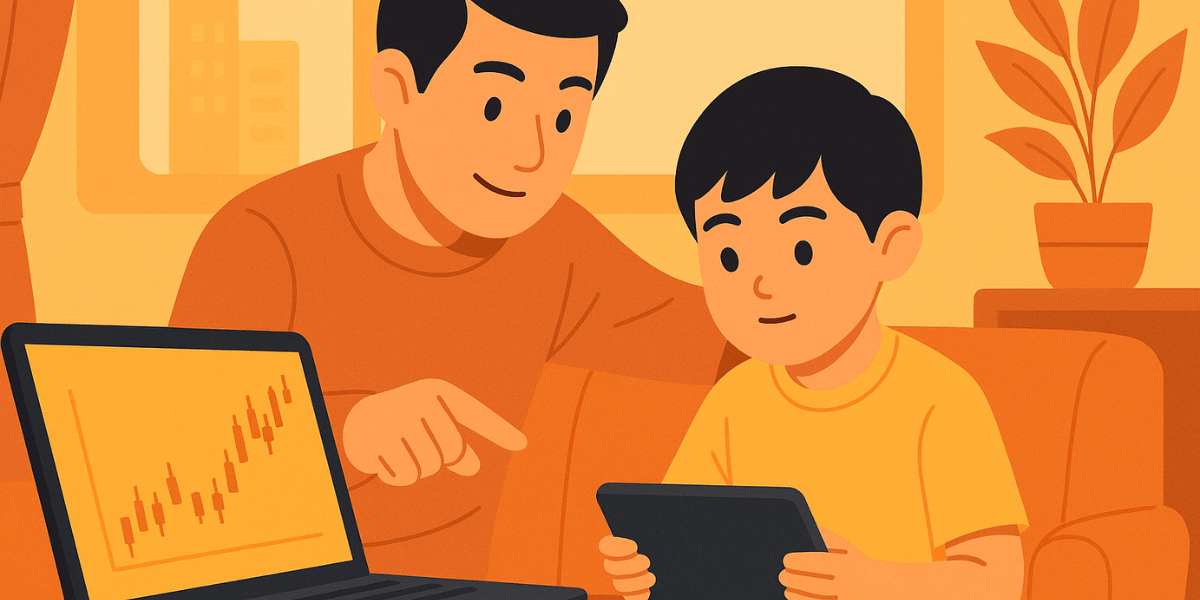
For decades, financial astrology occupied a fringe corner of the investment world—something whispered about, occasionally joked about, and mostly ignored by serious market participants. Yet in the last three years, something unexpected has happened across Asian social media: a noticeable resurgence of interest in astrological frameworks as supplemental tools for financial decision-making. Gen Z traders, in Singapore, Malaysia, Indonesia, Thailand, Japan, South Korea, and the Philippines, are openly discussing moon cycles, Mercury retrogrades, Venus transits, and planetary alignments as part of their trading process. What was once dismissed as pseudoscience has now re-emerged as a cultural microtrend that blends superstition, psychology, and algorithmic trading in ways that are far more complex than they appear at first glance.
This resurgence does not imply that young Asian traders have abandoned technical analysis or risk management. Instead, many incorporate astrological ideas as a form of emotional guidance or sentiment interpretation. Some treat it as a playful overlay; others as a psychological anchor during volatile markets. What is certain is that the trend is real, growing, and shaped by uniquely Asian social media patterns. Understanding it requires looking beyond the surface-level debates about whether astrology “works” and instead examining what it represents to a generation raised amid financial instability, digital overload, rising uncertainty, and the cultural blending of traditional beliefs with modern technology.
Why Astrology Is Resurfacing Among Asian Gen Z Traders
To understand the new wave of financial astrology among young traders in Asia, one must look at social, economic, and cultural factors that have shaped the last decade. Gen Z traders entered financial markets during unprecedented volatility: the COVID crash, the crypto boom, meme stocks, the collapse of Luna, FTX’s implosion, rising inflation, and geopolitical tensions. This constant turbulence created a trading environment defined by unpredictability. In such an environment, astrology presents itself not as a replacement for analysis but as an emotional framework to interpret uncertainty.
Additionally, many Asian cultures have historically relied on fortune-telling practices—Chinese zodiac readings, Japanese omikuji, Thai astrology, Korean saju, and Indian Vedic astrology, to name a few. These practices were never fully separated from daily decision-making. Gen Z traders, shaped by global social media but rooted in local cultures, merge traditional beliefs with modern trading tools. Astrology thus becomes a hybrid symbol of identity, spirituality, and financial self-expression.
Social media amplifies this resurgence. Platforms like TikTok, Instagram Reels, YouTube Shorts, and X (formerly Twitter) enable short, visually appealing content that blends humor, metaphors, and simplified astrology. These formats resonate with younger traders who are accustomed to consuming financial information quickly. Influencers who produce “astro-trading calendars,” “retrograde warnings,” or “moon cycle trading signals” receive millions of views—not because traders take them literally, but because the content is entertaining, symbolic, and psychologically comforting.
The result is a fascinating blend of entertainment, self-reflection, cultural tradition, and market participation that reshapes how Gen Z processes risk.
The Role of Social Media Algorithms in Amplifying the Trend
The revival of financial astrology in Asia cannot be understood without analyzing how social media distributes content. Algorithms prioritize engagement, emotion, and relatability. Astrology content naturally checks all three boxes: it is visually expressive, emotionally charged, and easy to personalize. Financial astrology, in particular, combines elements of uncertainty, humor, and community—qualities that drive virality.
When traders experience a losing streak, they often turn to relatable memes that reduce frustration. Astrology-based trading memes—jokes about Mercury retrograde ruining trades, or moon phases explaining volatility—create a sense of community. This emotional bonding triggers further algorithmic amplification. The more people share, react, or laugh at these posts, the more visibility they gain. Over time, even traders who do not believe in astrology become familiar with the terminology simply through exposure.
Furthermore, social media incentivizes creators to produce simplified frameworks. Flowcharts like “If Venus is in Pisces, avoid EUR/JPY,” or “Full moon means wait for reversals,” become digestible content for quick swiping. While oversimplified, these snippets feed the idea that astrology can complement trading. The content becomes a symbolic language rather than a literal toolkit. This blurring of symbolism and strategy is what drives the trend forward.
Astrology as an Emotional Risk-Management Tool
Critics often misinterpret the resurgence of astrology as irrational. However, its appeal to Gen Z traders is not purely mystical. In practice, many young traders use astrology as a tool to regulate emotions. Markets create stress, uncertainty, cognitive overload, and decision fatigue. Astrology offers psychological structure in a chaotic environment. It transforms randomness into narrative, enabling traders to attach meaning to volatility, even if symbolically.
A Gen Z trader who attributes a bad trading day to Mercury retrograde may simply be externalizing frustration in a humorous, harmless way. This creates emotional distance from losses. Similarly, a trader who uses moon cycles as reminders for patience or cooldown periods is not basing trades on planetary motion but using a symbolic framework to regulate impulsive decisions.
In psychological terms, astrology functions as a cognitive scaffold. It encourages reflection, slows decision-making, and provides mental boundaries. It is similar to rituals practiced by athletes, artists, or performers. Whether it has predictive power is not the primary question—its psychological utility is.
How Astrology Is Being Integrated with Modern Trading Tools
One of the most surprising aspects of this trend is how Gen Z traders integrate astrological concepts with algorithmic systems. Across Asian social media, there are examples of traders building:
- Moon phase indicators for TradingView charts - Automated scripts that combine lunar cycles with volatility filters - Symbolic sentiment trackers using astrology keywords - Calendars marking planetary retrogrades overlaid with economic events - Backtests comparing full moon periods with market ranges
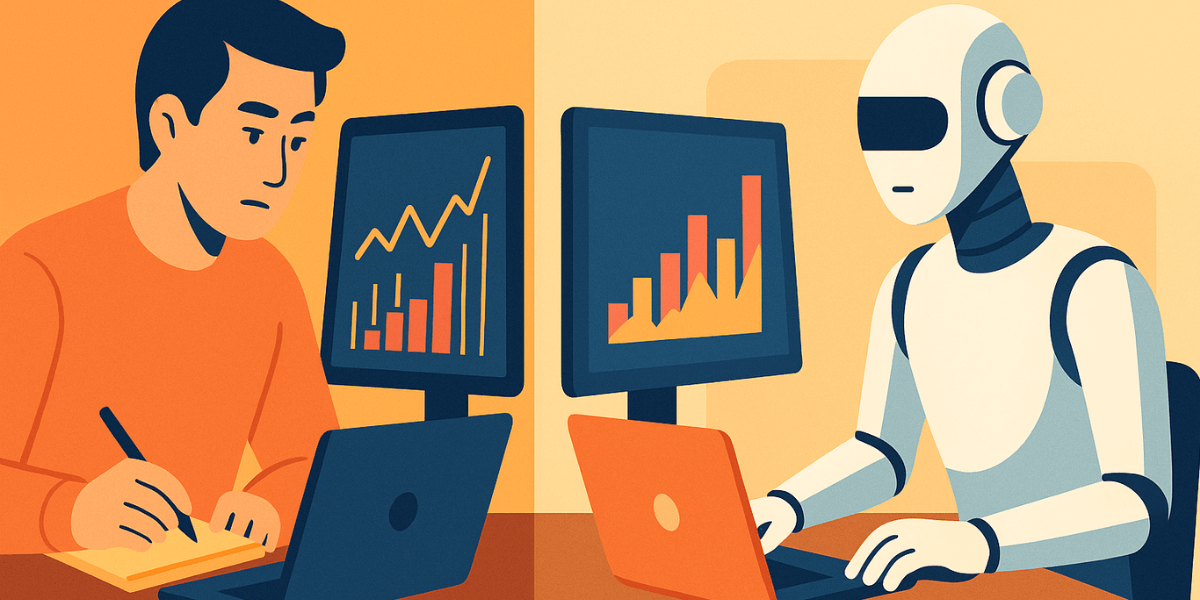
While these projects are not scientifically rigorous, they reflect a desire to merge symbolic and analytic frameworks. For many young traders, astrology is not a prediction engine but an aesthetic layer added to technical analysis. It creates a personalized trading environment that feels aligned with identity, culture, and emotional needs.
Cultural Nuances: Why Asia Differs from the West
The Asian resurgence of financial astrology is culturally distinct from Western versions. In Asia, astrology has deep historical roots embedded in everyday life. In Singapore and Malaysia, Chinese metaphysics influences business decisions. In Thailand and Indonesia, astrology intersects with spirituality. In Korea and Japan, fortune readings are common during exams, job interviews, and personal milestones. This cultural backdrop makes astrology feel natural rather than fringe.
Unlike Western astrology, which is largely personality-based, Asian astrological systems often focus on timing—interpreting auspicious moments for decisions. This mirrors the timing-oriented nature of trading. Therefore, when Gen Z traders in Asia explore astrology, they are tapping into systems that already have cultural legitimacy. This legitimacy creates a smoother psychological bridge between astrology and financial behavior.
Case Studies: Social Media Influencers Fueling the Trend
Across TikTok, YouTube, and Instagram, several influencers have shaped the modern “Astro-trading” identity. Their content varies widely—from comedic interpretations to pseudo-academic analysis. Some produce monthly “trading energy forecasts,” while others create humorous parodies about blaming the stars for losing trades.
Notably, several influencers in Singapore and Malaysia blend astrology with motivational content, encouraging young traders to maintain discipline during high-stress periods. In Thailand, astrology-themed crypto channels gained significant traction during the 2021 bull run. In Japan and Korea, creators use minimalistic aesthetics—moon phases, retrograde animations, abstract planetary graphics—to craft videos that appeal to visually oriented young traders.
These influencers do not claim astrology predicts markets. Instead, they present it as a symbolic tool for self-awareness. Their content fills a psychological niche: traders who feel overwhelmed by uncertainty find comfort in narratives that frame volatility as cyclical rather than random.
The Dangers and Pitfalls of the Trend
While astrology can serve emotional or cultural functions, it becomes problematic when traders treat it as a predictive system. Over-reliance on astrological forecasts can lead to poor risk management, confirmation bias, and misplaced confidence. Some inexperienced traders may abandon technical or fundamental analysis altogether, believing planetary movements can replace strategy. This is rare but not nonexistent.
Additionally, scammers have taken advantage of the trend. Paid groups offering “astrological trading signals” have emerged across Asian messaging platforms. These groups often disguise themselves as spiritual communities while charging monthly fees for predictions that hold no empirical validity. Such manipulative environments can mislead inexperienced traders into making financially harmful decisions.
The key distinction is understanding astrology as symbolism versus astrology as strategy. As long as it remains symbolic—an emotional compass rather than a technical tool—it poses little risk. The danger lies in misinterpreting symbolism as science.
What This Trend Reveals About Gen Z’s Relationship with Finance
The resurgence of astrology in trading speaks to a deeper generational shift. Gen Z traders approach finance through a psychological, cultural, and identity-driven lens. They do not separate emotion from strategy as strictly as previous generations. Instead, they seek holistic approaches that integrate lifestyle, symbolism, intuition, and data.
The trend highlights a broader truth: young traders are not merely seeking profits—they are seeking meaning, self-expression, and emotional connection in financial markets. Astrology provides a shared language that blends humor, community, cultural tradition, and psychological comfort. It embodies the emotional complexity of trading in the digital age.
Conclusion
The resurgence of financial astrology among Gen Z traders in Asia is neither a regression nor a rebellion. It is a cultural, psychological, and aesthetic response to the complexities of modern trading. Astrology offers narrative, identity, emotional grounding, and a sense of connection in an increasingly chaotic financial landscape. While it cannot predict markets, it does serve real psychological and cultural functions that should not be dismissed lightly.
Understanding this trend requires moving beyond debates about accuracy and acknowledging the deeper motivations behind it: financial anxiety, cultural heritage, digital expression, and the human need for meaning. As long as traders treat astrology as symbolism rather than strategy, its resurgence is not a threat—but a reflection of how modern trading culture evolves in the age of social media and uncertainty.
Frequently Asked Questions
Do Gen Z traders in Asia really use astrology to make trading decisions?
Some do, but mostly in symbolic or emotional ways. Few rely on astrology as a technical tool; most use it as a psychological or cultural reference.
Is financial astrology popular across all Asian countries?
It is most popular in Singapore, Malaysia, Thailand, Indonesia, South Korea, Japan, and the Philippines, where cultural traditions support belief in metaphysical systems.
Can astrology predict market movements?
No. Astrology has no empirical or scientific predictive power. Its role is symbolic, emotional, and cultural, not analytical.
Why is the trend growing on social media?
Short-form platforms amplify visually engaging content. Astrology blends well with humor, memes, aesthetic visuals, and emotional storytelling, making it algorithm-friendly.
Note: Any opinions expressed in this article are not to be considered investment advice and are solely those of the authors. Singapore Forex Club is not responsible for any financial decisions based on this article's contents. Readers may use this data for information and educational purposes only.