The global trading landscape is undergoing one of the most profound transformations in its history. Algorithms, artificial intelligence (AI), and data-driven systems are reshaping not just how trades are executed, but how trading careers are built and sustained. The traditional image of the trader—fast, instinctive, and human-centered—is being replaced by a hybrid model where machines handle speed, and humans handle strategy. To remain relevant in this new paradigm, traders must evolve from pure execution to adaptive intelligence. This article explores how to future-proof your trading career in an era defined by automation, AI, and continuous change.
Across Asia—particularly in Singapore, Hong Kong, and Tokyo—financial institutions and retail traders alike are embracing algorithmic tools, automated platforms, and data science as standard components of market participation. Yet with opportunity comes risk: traders who resist adaptation may find themselves outpaced not by competitors, but by code. The key to longevity is no longer who can trade faster—but who can think deeper, learn faster, and collaborate intelligently with technology.
The Automation Revolution in Trading
Automation is not a distant threat; it is already here. In modern markets, over 80% of forex and equity orders globally are executed through algorithmic systems. These programs, powered by machine learning and high-frequency data, can process millions of inputs per second—far beyond human capacity. What once required entire teams now fits into a few lines of optimized code.
However, automation does not spell extinction for human traders. Instead, it marks a shift in what skills matter most. Where once intuition and reaction time were the edge, now it’s interpretation, system design, and risk governance. Human creativity, ethical judgment, and contextual awareness have become the new alpha factors in a world run by machines.
The Three Layers of Automation
- Execution Automation: Systems that handle order entry, risk limits, and trade routing—reducing latency and human error.
- Analytical Automation: Machine learning models that scan patterns, analyze sentiment, and optimize strategies based on vast datasets.
- Decision Augmentation: AI systems that provide recommendations, forecasts, or risk alerts—leaving final judgment to humans.
Understanding which layer you interact with determines how to future-proof your career. Traders who can collaborate with, interpret, and improve these systems will remain indispensable.
From Trader to Technologist: A Necessary Evolution
To thrive in the age of automation, traders must expand beyond market knowledge into technological fluency. This does not mean every trader must become a programmer, but understanding how algorithms work—their logic, limitations, and biases—is now part of professional literacy.
Core Technical Skills for the Modern Trader
- Algorithmic Thinking: Breaking down trading ideas into step-by-step logic suitable for automation.
- Data Literacy: Understanding how to interpret, clean, and analyze large datasets to identify statistically significant patterns.
- Coding Familiarity: Basic proficiency in Python, R, or SQL helps traders communicate effectively with developers and quants.
- API Integration: Knowing how platforms and data feeds connect enables flexibility in strategy testing and automation.
In Asia, where fintech innovation is accelerating, traders who blend market intuition with technical understanding stand at a competitive advantage. They are not replaced by automation—they orchestrate it.
Soft Skills: The Human Edge That Machines Can’t Replicate
While AI can process data at lightning speed, it cannot yet replicate human adaptability, creativity, or ethical reasoning. As automation expands, these “soft” skills are becoming hard currency in the trading world.
Essential Human Competencies for the Automated Era
- Emotional Regulation: Machines don’t panic—but traders do. Those who master emotional self-control can complement automation with stability and judgment.
- Strategic Thinking: Understanding macroeconomic, geopolitical, and behavioral nuances that no algorithm can quantify entirely.
- Ethical Reasoning: Evaluating the implications of algorithmic decisions and ensuring fairness, compliance, and transparency.
- Adaptability: Willingness to evolve, learn, and unlearn as new tools reshape workflows and market structures.
Ironically, as trading becomes more mechanical, humanity itself becomes the edge. The future belongs to traders who balance precision with perspective.
Continuous Learning: The New Currency of Career Longevity
In a world where algorithms evolve faster than education systems, lifelong learning is the only sustainable hedge. Future-proof traders treat learning as a daily routine—not a one-time certification. They stay curious about emerging technologies, regulatory changes, and psychological principles that affect performance.
Learning Strategies for Future-Proof Traders
- Microlearning: Consume small, focused lessons on data science, behavioral finance, or platform automation weekly.
- Peer Learning: Engage in communities and forums where ideas and code are shared freely—collaboration accelerates mastery.
- Cross-Disciplinary Learning: Combine finance with neuroscience, psychology, or AI ethics to gain unique analytical perspectives.
- Reverse Mentorship: Younger traders often understand new technologies intuitively—learn from them while sharing your market experience.
In short, traders who learn like algorithms—iteratively and continuously—will outlast those who resist change.
Risk Management in Automated Markets
Automation amplifies both efficiency and risk. A small coding error can trigger massive losses within milliseconds. Thus, future-proof traders must develop sophisticated risk management systems that combine human oversight with algorithmic precision.
Principles of Automated Risk Control
- Multi-Layer Monitoring: Combine real-time alerts, human review, and back-end analytics to ensure system integrity.
- Fail-Safe Protocols: Set circuit breakers and maximum exposure limits to contain unexpected volatility or execution errors.
- Stress Testing: Simulate worst-case scenarios before deploying strategies live to ensure resilience under extreme market conditions.
- Behavioral Risk Awareness: Document how emotional states influence code adjustments or manual overrides—self-awareness reduces compounding mistakes.
Automation without discipline is chaos at speed. The trader’s role is to ensure control and coherence in increasingly autonomous systems.
The Psychological Adaptation: Redefining Identity and Purpose
Automation forces traders to ask deeper questions: “If machines trade better, what is my role?” The answer lies in redefining purpose. Traders are no longer just executors of strategy—they are architects of insight, curators of data, and stewards of ethical market behavior.
Embracing automation requires psychological flexibility. Instead of competing with algorithms, the goal is to collaborate with them—to use machines for what they do best, and to preserve human judgment for what only humans can perceive. This mindset shift reduces anxiety, enhances performance, and aligns traders with the inevitable evolution of markets.
Building Mental Resilience
- Practice mindfulness or brief mental resets during trading hours to prevent cognitive overload.
- Adopt journaling to analyze emotional reactions to algorithmic systems and automation errors.
- Maintain realistic expectations—algorithms fail too; perfection is not the goal, adaptability is.
- Develop a long-term identity around learning, not results. This makes career transitions smoother as technologies evolve.
Career Diversification: Expanding Beyond Execution
Future-proof traders diversify not just portfolios, but skills and career pathways. The modern trading professional may evolve into data strategist, risk manager, fintech consultant, or system designer. These adjacent roles provide stability and adaptability in a rapidly transforming industry.
Potential Career Pathways in the Automation Era
- Quantitative Analyst: Focus on data modeling, backtesting, and system optimization.
- Behavioral Finance Specialist: Analyze the intersection of psychology and market behavior.
- Fintech Product Developer: Design user-centered trading platforms and analytics tools.
- AI Risk Consultant: Ensure algorithmic fairness, compliance, and transparency.
The future trader is not a specialist trapped in a narrow function but a versatile professional who navigates multiple disciplines fluently.
Regulation and Ethics in the Automated Era
Automation’s expansion raises critical ethical and regulatory questions. What happens when algorithms manipulate micro-movements or exploit systemic inefficiencies? How can traders ensure transparency and accountability in black-box systems? These are not abstract issues—they define the future legitimacy of the trading profession.
Across Asia, regulators like MAS (Singapore) and the FSA (Japan) are pioneering frameworks for AI governance and responsible trading technology. Understanding these developments is as vital as understanding market indicators.
Core Principles of Ethical Automation
- Transparency: Document and disclose algorithmic logic to avoid hidden risks.
- Accountability: Maintain manual oversight and clear audit trails for all automated activity.
- Fairness: Ensure systems do not exploit latency disparities or create market distortion.
- Security: Protect systems from hacking, data leaks, or algorithmic manipulation.
Ethical literacy is now part of technical competence. The trader of the future must be both a technologist and a moral decision-maker.
The Asian Perspective: Adaptation as Cultural Strength
Asian markets have historically excelled at technological adoption. From Japan’s early robotics revolution to Singapore’s AI-driven financial architecture, adaptability is a defining regional strength. Traders in Asia are uniquely positioned to blend tradition with innovation—balancing methodical discipline with digital agility.
In this context, “future-proofing” aligns naturally with Asian philosophies emphasizing continuous self-improvement (Kaizen in Japan) and harmony between human effort and technological flow (Wu Wei in China). The result is a new trading culture that values balance as much as performance—a principle that ensures long-term sustainability.
The Future Trader: A Human-Machine Partnership
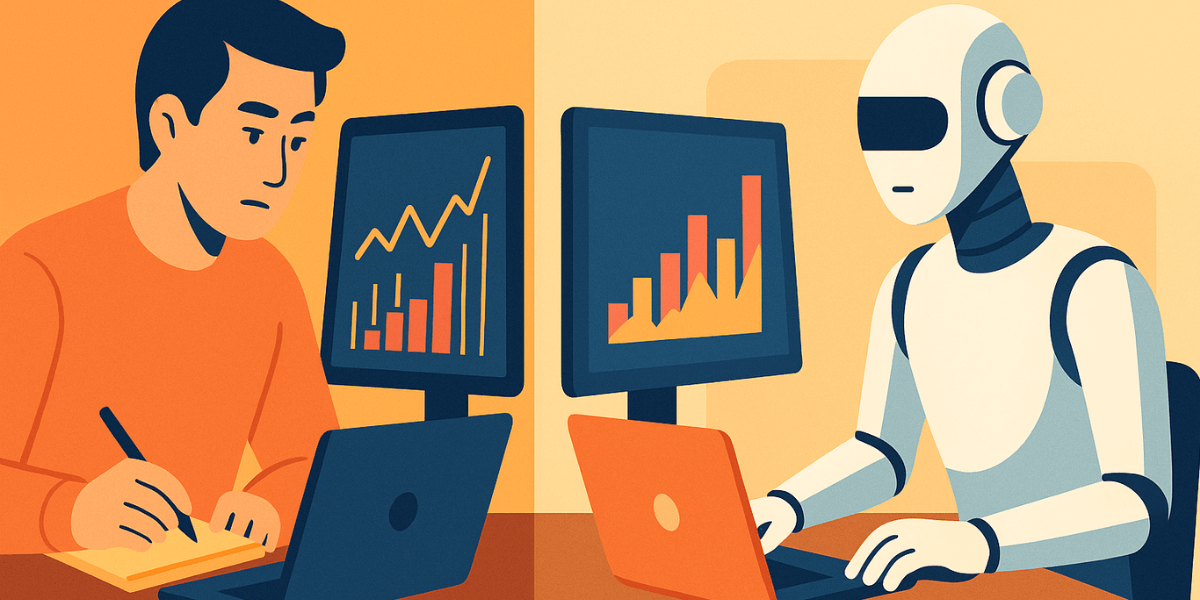
In the next decade, the most successful traders will not be those who outsmart algorithms but those who work symbiotically with them. The human-machine partnership will define the edge of the future. Machines will analyze, predict, and execute; humans will guide, interpret, and adapt.
Automation liberates traders from repetitive tasks, allowing focus on creativity, strategy, and innovation. The challenge is not to fight automation—but to lead it with intelligence, ethics, and foresight.
Conclusion
To future-proof your trading career in the age of automation, is to redefine what it means to be a trader. The role is no longer about speed or instinct—it’s about insight, adaptability, and lifelong curiosity. The market will always evolve; the question is whether you evolve with it or get left behind.
The trader of tomorrow will combine algorithmic logic with human empathy, technological mastery with ethical judgment, and data-driven precision with creative thinking. In a world where machines can replicate skill but not purpose, your edge is not in how fast you trade—but in how deeply you think.
Frequently Asked Questions
Will automation make human traders obsolete?
No. Automation replaces routine tasks, not human insight. Traders who adapt to hybrid systems remain essential for strategic interpretation and risk oversight.
What skills are most important for future traders?
Data literacy, algorithmic awareness, emotional intelligence, adaptability, and ethical reasoning are now critical success factors.
How can traders learn about automation?
Start with basic coding (Python), API usage, and data analysis. Combine that with continuous learning on fintech trends and behavioral psychology.
Are automated systems fully reliable?
No system is perfect. Code errors, market anomalies, or data biases can still cause failures. Human oversight remains essential.
How can traders stay relevant over the next decade?
Adopt a growth mindset: learn continuously, collaborate with technology, and focus on developing cross-disciplinary expertise that machines cannot replicate.
Note: Any opinions expressed in this article are not to be considered investment advice and are solely those of the authors. Singapore Forex Club is not responsible for any financial decisions based on this article's contents. Readers may use this data for information and educational purposes only.