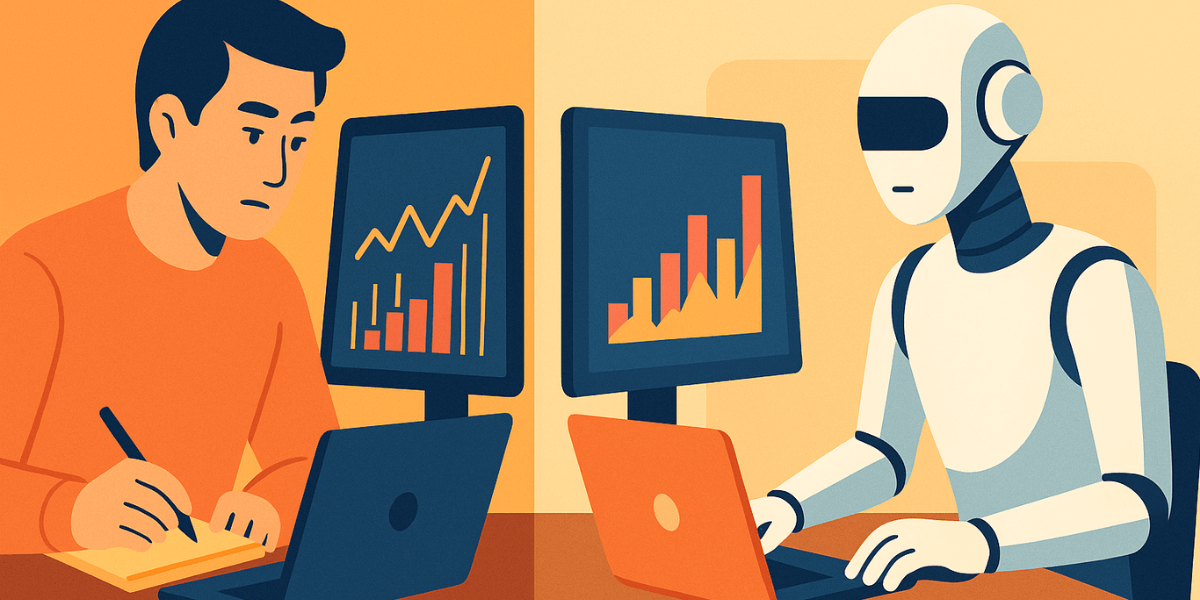
Artificial intelligence (AI) has become a cornerstone of modern finance. From trade execution and sentiment analysis to portfolio optimization, AI systems now drive a growing share of market activity. Yet, beneath the speed and sophistication of these systems lies a critical question: can AI truly be fair? In a domain as data-driven and competitive as financial markets, the potential for algorithmic bias poses not only ethical challenges but also tangible financial risks.
AI bias in trading models is not about malice—it’s about math. When algorithms learn from historical data, they inherit the imperfections, asymmetries, and human biases embedded in that data. These biases can distort predictions, misprice assets, or unfairly allocate opportunities, leading to systemic inefficiencies or even market instability. The irony is that systems designed to eliminate emotion may inadvertently reproduce the very inequities they were meant to overcome.
This article explores the origins of bias in financial AI, how it manifests across trading systems, and what can be done to identify, mitigate, and govern it. Fairness in AI is not a philosophical luxury; it is a practical necessity for the stability and integrity of global markets.
The Rise of AI in Financial Markets
AI adoption in finance has been exponential. Algorithmic trading, quantitative modeling, and machine learning (ML) systems have redefined how decisions are made. Institutional investors now rely on models that process millions of data points per second, from market microstructure to alternative data like satellite imagery or social sentiment. The efficiency is undeniable—but so is the opacity.
From Human Judgment to Machine Learning
Traditional financial models were deterministic: they followed explicit, rule-based systems. AI, by contrast, learns patterns from data without direct human programming. This flexibility allows it to uncover relationships invisible to human analysts—but it also makes it difficult to explain how decisions are reached. This “black box” problem becomes especially critical when bias seeps into the model without being noticed.
Examples of AI Use in Trading
- High-Frequency Trading (HFT): Algorithms execute orders in microseconds based on evolving market conditions.
- Portfolio Optimization: AI balances assets by analyzing vast historical datasets to minimize risk and maximize returns.
- Sentiment Analysis: Natural language processing (NLP) models scan news, social media, and financial reports for emotional and informational cues.
- Credit Scoring and Risk Models: Machine learning assesses borrower reliability or default probability using structured and unstructured data.
These applications promise greater accuracy and efficiency. However, because they depend on past information, they risk perpetuating historical distortions. If past markets were unequal, biased, or inefficient, the AI’s outputs may simply replicate those dynamics with higher speed and scale.
What Is Bias in Trading Models?
In the context of AI, bias refers to systematic errors that lead to unfair, inaccurate, or unrepresentative results. In finance, bias can cause models to overvalue certain assets, underprice risk, or misallocate liquidity. It can also reinforce existing power dynamics between large institutions and smaller players.
Types of Bias in Financial AI
- Data Bias: Occurs when the training data itself is skewed or incomplete. For instance, a trading model trained only on bull-market data will perform poorly in a downturn.
- Sampling Bias: Happens when the dataset does not represent the full diversity of market conditions, regions, or asset classes.
- Label Bias: Arises when target outcomes used for training reflect subjective or flawed human judgments (e.g., analyst ratings or credit scores).
- Algorithmic Bias: Emerges from the design of the model itself—such as weighting certain inputs disproportionately or using optimization criteria that favor one group of assets over another.
- Feedback Bias: Results from models influencing the data they later retrain on. For example, widespread use of similar AI systems can amplify specific trading patterns, reinforcing the very biases they created.
Each type of bias compounds the others, creating a loop where data and decisions continually reinforce pre-existing distortions in market behavior.
How Bias Manifests in Trading Systems
Bias in trading models is often subtle but powerful. It can distort not only individual trades but also broader market dynamics.
1. Asset Mispricing
When algorithms overemphasize particular features (such as short-term volatility or sector performance), they may systematically misprice assets. These distortions can create bubbles or inefficiencies that ripple across entire markets. AI bias thus becomes a form of invisible market friction.
2. Liquidity Inequality
Some algorithms allocate liquidity preferentially to large institutions or frequently traded assets, leaving smaller participants with worse execution prices. This feedback loop strengthens the dominance of already-powerful market players and undermines fairness in access to liquidity.
3. Sentiment Misinterpretation
Natural language models may misclassify sentiment due to cultural or linguistic nuances. For instance, sarcasm in news headlines or region-specific expressions may lead AI systems to misinterpret tone, triggering erroneous buy/sell signals. These linguistic biases can be especially problematic in global markets where language diversity is vast.
4. Geographic or Temporal Bias
Models trained predominantly on Western market data may perform poorly in Asian or emerging markets due to structural and behavioral differences. Similarly, systems trained on recent high-volatility years may overreact to minor fluctuations in calmer markets. The time and place of training matter more than most traders realize.
5. Risk Amplification
In times of stress, similar models may react identically—dumping positions simultaneously, triggering flash crashes or liquidity shortages. This “herding effect” magnifies systemic risk. Bias toward short-term data or similar parameters can make market behavior dangerously synchronized.
Why AI Fairness Matters in Trading
At first glance, fairness might seem like a moral or regulatory issue, not a trading one. But in reality, bias undermines efficiency, profitability, and credibility. Unchecked bias damages both individual strategies and market-wide stability.
1. Efficiency and Profitability
Biased models misinterpret signals and execute suboptimal trades. Over time, this erodes alpha and raises risk exposure. Fairer models—those trained on balanced, representative data—tend to produce more resilient and consistent performance.
2. Risk Management
Bias blinds traders to certain types of risk. For instance, if a model consistently underestimates downside scenarios due to overfitting bullish data, portfolio risk becomes asymmetrical. Recognizing and correcting bias improves model robustness under varied conditions.
3. Market Integrity
AI bias can distort price discovery, exacerbate inequality, and reduce trust among market participants. Regulators are increasingly aware of this, and financial institutions that ignore fairness risk reputational and legal consequences.
4. Regulatory Expectations
Authorities like the Monetary Authority of Singapore (MAS) and the European Securities and Markets Authority (ESMA) now emphasize algorithmic accountability. AI systems must be explainable, auditable, and transparent. Fairness is becoming a compliance issue as much as a technological one.
Sources of Bias in Financial Data
Bias in AI models begins with bias in data. Financial data, by nature, is not neutral—it reflects human behavior, policy decisions, and institutional practices. Understanding these origins is key to addressing them.
Historical Data Limitations
Markets evolve, but historical data remains static. Models trained on outdated structures—such as pre-2008 leverage patterns or pre-ESG portfolio norms—can make flawed assumptions about present dynamics. “Learning from the past” only works if the past resembles the future.
Selective Data Inclusion
Traders often cherry-pick datasets that confirm their hypotheses, leading to confirmation bias. If datasets exclude low-liquidity periods, negative outliers, or regions with poor data quality, the model will inherit a sanitized version of reality.
Socioeconomic Bias in Alternative Data
AI increasingly relies on alternative data (social media, geolocation, satellite imagery). These sources can embed demographic or geographic biases—for example, social sentiment data underrepresents populations without digital access, skewing signals toward wealthier or urban demographics.
Detecting and Measuring Bias in Trading Models
Bias cannot be eliminated entirely, but it can be detected, measured, and mitigated through structured approaches. Financial AI developers are beginning to borrow methods from ethical AI research to ensure fairness in model design.
1. Bias Testing and Diagnostics
Testing models across multiple market regimes helps identify whether performance deteriorates disproportionately under certain conditions. Backtesting should include not only profit metrics but fairness metrics, such as performance parity across regions, timeframes, or asset types.
2. Feature Importance and Explainability
Techniques like SHAP (SHapley Additive exPlanations) and LIME (Local Interpretable Model-agnostic Explanations) allow developers to trace which inputs influence predictions most. If non-essential or biased variables dominate, adjustments can be made before deployment.
3. Counterfactual and Scenario Analysis
Simulating how models would behave under alternative conditions—different macro environments, liquidity levels, or market structures—helps expose hidden biases. This is crucial for evaluating resilience and fairness across diverse scenarios.
Mitigating Bias: Practical Steps for Traders and Institutions
Traders, portfolio managers, and data scientists can take actionable steps to reduce bias without sacrificing performance. The key is to integrate fairness into the design process rather than treat it as an afterthought.
1. Diversify Data Sources
Use data from multiple providers, geographies, and timeframes. The more diverse the input, the less likely the model will develop overfitted or one-dimensional behavior.
2. Apply Ethical Constraints in Model Design
Introduce fairness objectives into optimization functions. For instance, algorithms can be tuned to balance performance across sectors or avoid overexposure to specific asset classes that reflect biased training data.
3. Maintain Human Oversight
AI should augment—not replace—human judgment. Regular human review of AI outputs ensures context awareness and ethical consistency. Traders should treat AI as a decision-support tool, not a decision-maker.
4. Audit and Retrain Continuously
Bias changes over time as markets evolve. Continuous retraining with updated data prevents drift and ensures relevance. External audits by independent researchers can validate fairness claims and build transparency.
5. Transparent Reporting
Institutions can publish “AI fairness reports” or “model transparency statements” summarizing testing methodologies and results. This practice builds confidence among clients, regulators, and the broader public.
The Role of Regulation and Governance
As AI becomes integral to finance, regulators are setting clearer boundaries. The goal is not to stifle innovation but to ensure that automation enhances, rather than undermines, market integrity.
AI Governance Frameworks
The Monetary Authority of Singapore (MAS) established the FEAT principles—Fairness, Ethics, Accountability, and Transparency—for AI in finance. Similarly, the EU’s forthcoming AI Act will require explainability and proportionality in algorithmic decision-making. These frameworks encourage responsible innovation that aligns technology with public trust.
Institutional Responsibility
Financial institutions must integrate fairness into governance structures. This includes appointing AI ethics officers, establishing interdisciplinary committees, and embedding fairness testing into risk management procedures. Accountability must extend beyond developers to decision-makers.
Industry Collaboration
Bias mitigation is a collective effort. Shared datasets, benchmarking standards, and open collaboration between regulators, fintechs, and academia can accelerate progress. Transparency is the foundation of fairness.
Future Outlook: Can AI Ever Be Truly Fair?
Absolute fairness may be unattainable—markets themselves are imperfect, driven by human behavior, emotion, and unequal access to information. However, striving for fairness in AI is about minimizing harm and maximizing transparency. It’s about ensuring that automation doesn’t amplify inequality or instability.
In the next decade, fairness may become a competitive differentiator. Traders and institutions that can demonstrate unbiased, explainable AI will attract more investors and regulatory goodwill. Fairness will evolve from a compliance checkbox to a core business advantage.
Ultimately, fairness is not the absence of bias—it’s the presence of accountability. The future of finance depends on recognizing that machines reflect the values of those who build and deploy them. As AI reshapes markets, fairness must remain the invisible hand guiding its algorithms.
Conclusion
Artificial intelligence has revolutionized financial markets, but it also mirrors their imperfections. Bias in trading models is both a technical and ethical challenge—one that demands awareness, governance, and continuous adaptation. Fair AI is not an idealistic goal; it’s a practical necessity for market efficiency, stability, and trust.
Traders who understand bias gain an edge. They recognize when models are overfitted, when predictions drift, and when performance gaps hint at deeper structural flaws. In an age where algorithms move markets, awareness becomes alpha.
By embracing fairness, transparency, and accountability, the financial industry can ensure that AI fulfills its potential—not as a source of distortion, but as a force for efficiency and inclusion. Fairness, in the end, is the most profitable form of intelligence.
Frequently Asked Questions
What causes bias in AI trading models?
Bias arises from skewed or incomplete data, flawed model design, and feedback loops where algorithms learn from their own distorted outcomes. Human assumptions in data labeling also play a role.
Can bias ever be fully eliminated?
No, but it can be minimized through diverse data, fairness testing, transparency, and ongoing model retraining. The goal is not perfection but continuous improvement and accountability.
How does AI bias affect traders financially?
Biased models can misprice risk, execute poor trades, and underperform in unseen market conditions. Over time, this leads to financial losses and reputational damage.
What are regulators doing about AI bias in finance?
Regulators like MAS, ESMA, and the EU are implementing fairness and transparency standards for algorithmic systems, requiring explainable AI and human oversight in trading operations.
How can traders detect bias in their systems?
Through backtesting across diverse scenarios, analyzing feature importance, running fairness diagnostics, and comparing model behavior under different market regimes.
Why should fairness matter to traders?
Because fairness builds trust, reduces risk, and improves decision quality. In markets driven by AI, ethical intelligence is the new competitive edge.
Note: Any opinions expressed in this article are not to be considered investment advice and are solely those of the authors. Singapore Forex Club is not responsible for any financial decisions based on this article's contents. Readers may use this data for information and educational purposes only.